
Last updated October 16, 2026
 AC repair
 Furnace & heating
 Heat pumps
 Ductless mini splits
 Carrier
 Trane
Trane Goodman
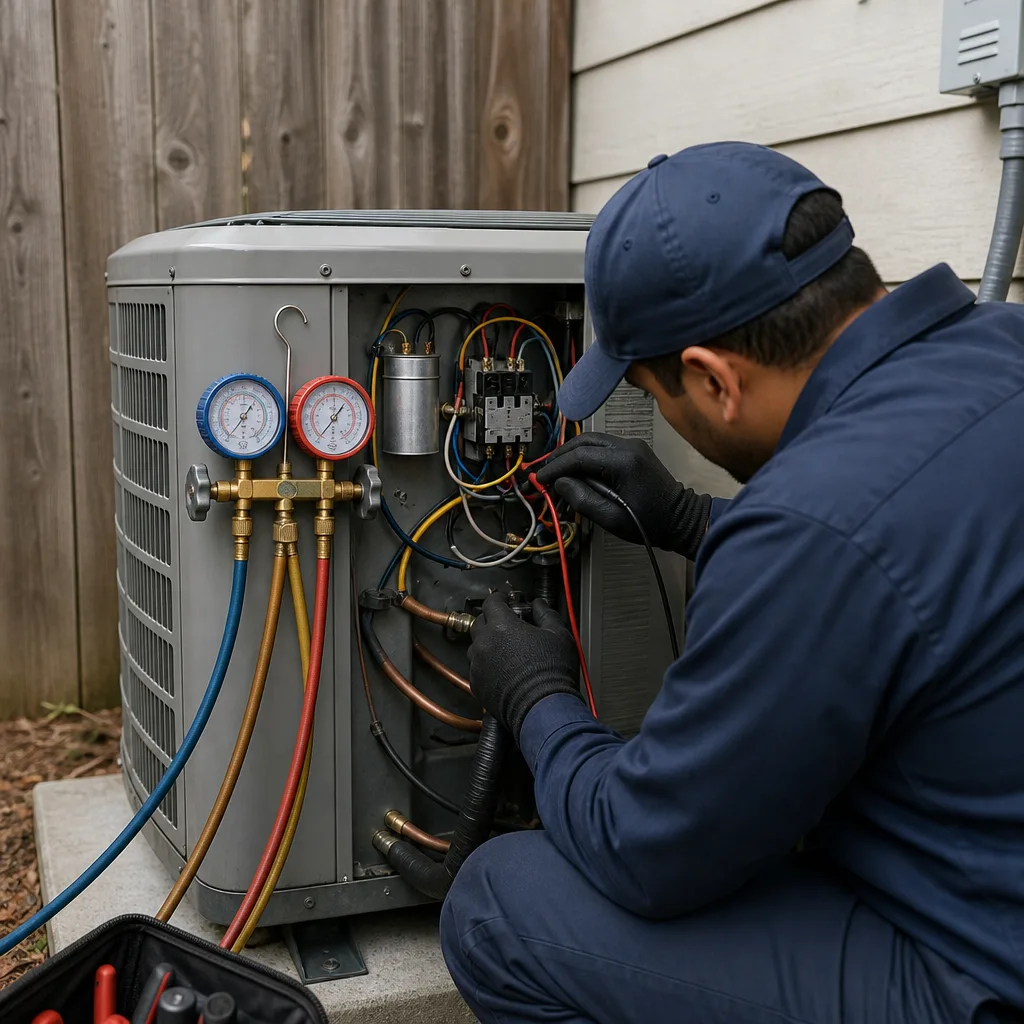
Seasonal tune-up and full diagnostic on your Carrier, Trane, or Goodman system - readings shown to you before any repair is proposed
Diagnosis first, numbers second - you approve the repair price before a single part goes in.
Get your free estimateHVAC Warning Signs: A San Antonio Homeowner’s Reference Guide
The three most expensive HVAC mistakes San Antonio homeowners make all start the same way: they notice a warning sign, Google the symptom, find one possible cause, and approve a repair for that cause without knowing there were four other causes that look identical from the outside. In our experience across San Antonio, we’ve walked into homes where a homeowner had already paid for a refrigerant recharge when the real problem was a clogged condensate line, or replaced a thermostat when the actual culprit was a failing capacitor. Our Complete Guide to HVAC in San Antonio and this article exist to close that information gap. You’ll learn what each warning sign actually indicates, which sounds demand immediate attention, how to use your CPS Energy app as a free diagnostic tool, and what to say to any technician who walks through your door.
Quick Answer
HVAC warning signs in San Antonio fall into six main categories: short-cycling, warm air, rising energy bills, unusual noises, indoor humidity problems, and visible frost or leaks. Each sign points to between two and four possible underlying causes, and fixing the wrong cause wastes hundreds of dollars. When you notice any of these signs, record the specifics (when it happens, what it sounds like, what the thermostat reads) before calling a professional, because that detail is what separates a correct diagnosis from an expensive guess-something our AC Repair Maintenance Checklist for San Antonio Homeowners can help you track.
Styles & brands we work with
Table of Contents
- Symptom Reference Table: What Each Warning Sign Actually Means
- Why San Antonio Humidity Is a Legitimate HVAC Warning Sign
- HVAC Sounds: What to Stop and What to Note
- Using Your CPS Energy App as a Passive Monitoring Tool
- Refrigerant Leaks: What They Smell Like, Look Like, and Why Frost Is Not Your Friend
- Short-Cycling in San Antonio: The Four Causes That Look Identical
- Common Mistakes to Avoid
- When to Call a Professional
- Frequently Asked Questions
Symptom Reference Table: What Each Warning Sign Actually Means
Warning signs are deceptive because the same symptom can point to entirely different problems, each requiring a different repair and a different price. Here’s the map we use when we talk to San Antonio homeowners about what they’re seeing, hearing, or feeling from their system. Match your symptom to the possible causes, then look at the notes column to see what separates one cause from another.
- System turns on and off every 5-10 minutes (short-cycling)
- Possible causes: Low refrigerant charge, dirty condenser coil, oversized unit, failing thermostat sensor
- Separating detail: If it happens mostly in the afternoon heat, suspect the condenser coil or refrigerant. If it happens at all hours, suspect the thermostat or an oversized system.
- Air from vents feels warm or barely cool
- Possible causes: Refrigerant leak, compressor failure, frozen evaporator coil, blocked return vent
- Separating detail: Walk to the indoor unit. If you see frost on the copper line, that’s a refrigerant or airflow issue, not a thermostat problem.
- Electric bill climbs 20-30% with no change in usage
- Possible causes: Dirty outdoor coil, failing capacitor, refrigerant undercharge, duct leaks in the attic
- Separating detail: Check your CPS Energy app for a month-over-month comparison. A slow climb suggests coil or duct issues. A sudden jump suggests a failing component.
- Indoor air feels clammy or sticky even when the AC runs
- Possible causes: Oversized system short-cycling, low refrigerant, clogged condensate drain, system not running long enough to dehumidify
- Separating detail: In San Antonio, this is most common in July, August, and September when outdoor humidity peaks. More in the humidity section below.
- New or worsening sounds from the outdoor or indoor unit
- Possible causes: Failing capacitor, loose fan blade, failing compressor, refrigerant flow noise
- Separating detail: See the sounds section below. Some sounds mean stop the system now. Others can wait.
What matters here is not that you become a technician. It’s that you can have an informed conversation instead of approving a repair from a position of guesswork. When a technician arrives at your San Antonio home, you should be able to say “I hear this sound, I see this symptom, and here’s when it happens.” That information changes the diagnostic path.
If you’re reading this because your system is actively misbehaving, our AC Repair in San Antonio page explains our process and what to expect from a visit.
Why San Antonio Humidity Is a Legitimate HVAC Warning Sign
San Antonio’s humidity spikes hard in July, August, and September, when the combination of Gulf moisture and triple-digit temperatures creates outdoor dew points in the low 70s. Your air conditioner is doing two jobs during those months: dropping the indoor temperature and pulling moisture out of the air, as covered in our Seasonal HVAC Care for San Antonio: Year-Round Homeowner’s Guide. When the humidity removal part fails, you feel it immediately, because “the air feels cold but clammy” is not a comfort problem. It’s a diagnostic signal.
Cold and clammy usually means one of three things. The system is oversized for the home, so it cools the air so fast that it shuts off before it runs long enough to dehumidify. That’s common in older San Antonio homes where a previous owner or contractor replaced an original 3-ton unit with a 4-ton unit thinking bigger is better. Bigger is not better here. It means hot, short cycles, poor dehumidification, and higher bills.
The second cause is low refrigerant. When the refrigerant charge drops, the evaporator coil can’t absorb as much heat, so less condensation forms on the coil and less moisture leaves the air. You feel cool-ish air that feels damp and heavy. The third cause is a clogged condensate drain, which is extremely common in San Antonio because our warm, humid climate encourages algae growth inside the drain line. When the drain clogs, the system may run but the water has nowhere to go, and humidity creeps back into the living space.
Here’s how to check the difference before calling anyone:
- Place a simple humidity gauge (about $10 at a hardware store) near a return vent and near a supply vent.
- Run the system for 20 minutes.
- If supply air humidity is above 55% while the system runs, your dehumidification is failing.
- Note whether the system runs for at least 15 minutes at a time. Short cycles of 5-8 minutes in humid weather strongly suggest an oversized unit.
This matters because San Antonio homes with persistent indoor humidity above 55-60% develop a completely different set of problems: mold in closets and bathrooms, warped wood around windows, dust mites, and that mildewy smell that never quite leaves. Fixing the humidity problem is not a luxury upgrade. It’s protecting the indoor air your family breathes and the surfaces you touch every day.
HVAC Sounds: What to Stop and What to Note
Most HVAC systems make some sound when they run. That’s normal. A compressor humming, a fan moving air, a faint click when the system cycles on. What matters is the difference between the sounds your system has always made and the sounds that are new, louder, or just wrong. Here’s a plain-language guide to which sounds demand immediate attention and which ones you can note and mention at your next maintenance visit.
Stop the system and call now:
- Buzzing or humming from the outdoor unit with no fan spinning. This often means the capacitor has failed and the compressor is locked up. Running it anyway can damage the compressor, which is the most expensive single component in the system.
- Grinding or metal-on-metal scraping from the outdoor unit. The fan motor bearings are failing. Left running, the fan blade can loosen and cut through the coil, turning a $300 motor repair into a $2,000+ coil replacement.
- Hissing or gurgling from the indoor unit when the system is off. This can indicate a refrigerant leak in the evaporator coil. Refrigerant leaks do not fix themselves, and they get progressively worse.
- A loud bang or pop when the system starts or stops. That’s a compressor issue or an electrical fault. Shut it down.
Note it and mention it at the next appointment:
- A soft clicking at startup and shutdown. That’s usually the relay engaging or the thermostat calling for cooling. Normal.
- A faint ticking from the outdoor unit while running. Often a small twig or piece of debris touching the fan blade. Easy fix, not urgent.
- A low whooshing or rushing sound when the blower starts. Typically ductwork expanding or contracting. Annoying but benign in most cases.
- A rattle that comes and goes. Usually a loose panel or screw. Worth mentioning but not an emergency.
One more San Antonio-specific note: after a strong thunderstorm or hail event, walk outside and look at the outdoor unit. Bent fins, debris, or a unit that’s off-level can create new sounds and efficiency losses that weren’t there before. If you hear something new after a storm, that’s not a coincidence.
If you’re hearing one of the “stop now” sounds, our Meadowsweet Heating and Air San Antonio home page has our contact information and response expectations.
Using Your CPS Energy App as a Passive Monitoring Tool
Most San Antonio homeowners never open their CPS Energy app except to pay a bill. That’s a missed opportunity, because the app contains a full usage history that serves as a free, always-on diagnostic tool for your HVAC system. Here’s how to read it.
Your AC system is typically the single largest electricity consumer in your San Antonio home, sometimes 50-60% of the total bill during summer months. When the system starts losing efficiency, whether from a dirty coil, a failing capacitor, or a slow refrigerant leak, it draws more power to produce the same amount of cooling. That change shows up in your usage data weeks before you might notice a comfort problem.
Here’s the step-by-step method:
- Open the CPS Energy app and navigate to your usage history.
- Find the same month from the previous year. Compare daily usage for that month to your current daily usage.
- Correct for weather differences. If this July is 5 degrees hotter than last July, some increase is expected. But if you’re using 30% more energy on a day with similar temperatures, that’s an efficiency problem.
- Look at usage on days when you were not home or the system should have been cycling normally. An unexplained upward trend across multiple days is your cue to call for a professional assessment before something fails completely.
The month-over-month comparison is the most useful. A gradual climb across three or four months suggests something like a dirty coil or a refrigerant undercharge that’s making the compressor work harder. A sudden, sharp spike in the middle of a billing cycle suggests a failed component, like a capacitor or a contactor, that’s causing the system to draw power inefficiently until it fails entirely.
This approach costs nothing and takes five minutes once a month. It’s the difference between catching a $250 repair early and facing a $4,000 replacement in August because nobody noticed the signs.
Refrigerant Leaks: What They Smell Like, Look Like, and Why Frost Is Not Your Friend
Refrigerant leaks are one of the most commonly misunderstood HVAC problems in San Antonio, and the misunderstanding usually centers on ice. Homeowners see frost on the copper line outside and think the system is working great. The air coming out is cold enough to freeze. That’s the opposite of the truth. Ice on the line set in July means the system is struggling, not thriving.
Here’s what’s actually happening. When refrigerant charge drops, the pressure inside the evaporator coil drops with it. That lower pressure makes the coil run colder than intended, cold enough to freeze the condensation that normally forms on it. The ice then insulates the coil, blocks airflow, and makes the system work even harder. Left alone, the ice can creep back toward the compressor and destroy it. If you see frost or ice on the copper lines or the outdoor unit in summer, shut the system off and let it thaw, then call a professional.
Refrigerant itself is mostly odorless in small amounts, but a significant leak can sometimes produce a faint sweet or chloroform-like smell near the indoor coil or the outdoor unit. What’s more visible is an oily residue. Refrigerant carries a small amount of compressor oil through the system, so a leak often leaves a greasy or wet-looking spot at the leak point, even after the refrigerant itself has evaporated away. In San Antonio’s heat, that oil spot can collect dust and look like a dirty smudge on the copper line or the coil.
You might also notice:
- The system runs constantly but the house never quite reaches the thermostat set point.
- The air from the vents feels cool but not cold.
- Your electric bill climbs as the compressor runs longer trying to compensate.
- You hear a hissing or bubbling sound from the indoor unit when the system is off.
One thing to be clear about: adding refrigerant without finding and fixing the leak is a temporary patch, not a repair. The leak will continue, the refrigerant will escape again, and you’ll be back in the same spot in weeks or months. A proper diagnosis finds the leak point first, then the repair path is clear.
Our AC Installation in San Antonio guide covers what happens when a leak is too extensive for a repair, and what replacement planning actually looks like.
Short-Cycling in San Antonio: The Four Causes That Look Identical
Short-cycling is the most common HVAC warning sign we hear about from San Antonio homeowners, and it’s the easiest one to misdiagnose because four different causes all produce the same visible behavior: the system turns on, runs for 5-10 minutes, shuts off, then starts again a few minutes later. If you Google “AC short cycling” you’ll find dozens of articles that each point to one cause. The truth is that any of the four can be the culprit, and the repair paths are completely different.
Cause one: low refrigerant charge. When the refrigerant is low, the low-pressure switch can trip, shutting the system down to protect the compressor. The system then restarts when pressure equalizes, and the cycle repeats. The telltale sign is that it happens more often in the afternoon heat, when the system is under the most load.
Cause two: a dirty condenser coil. San Antonio’s pollen, cottonwood, and construction dust settle on the outdoor coil and reduce heat rejection. The system overheats and shuts down. This looks nearly identical to a refrigerant problem from the outside, but the fix is a coil cleaning, not a recharge.
Cause three: an oversized unit. This one has been short-cycling since installation day. The system is too big for the home, so it satisfies the thermostat too quickly and shuts off. You’ll notice it happens at all hours, not just in extreme heat, and the indoor air often feels humid and sticky because the system never runs long enough to dehumidify.
Cause four: a failing thermostat sensor. If the thermostat’s temperature sensor is misreading, or if the thermostat is mounted on a wall that gets direct afternoon sun, it may think the home is cooler than it actually is and shut the system down early. That’s a $150 thermostat replacement instead of a $900 refrigerant repair, but it requires checking before assuming.
The financial difference between these four causes is dramatic. A thermostat replacement is a couple hundred dollars. A coil cleaning might be $150 to $300. A refrigerant leak repair can be $500 to $1,500 depending on the leak location. An oversized unit replacement is a multi-thousand-dollar project. Guessing wrong is expensive. That’s why our technicians measure superheat and subcooling, check static pressure, and test the thermostat before recommending any repair.
Common Mistakes to Avoid
- Approving a repair based on the first technician’s guess without asking how they ruled out the other causes. A good technician can explain their diagnostic path. If they can’t, get another opinion. The cost of a second diagnostic is almost always cheaper than fixing the wrong thing.
- Ignoring frost on the line because the air feels cold. Frost in July is a warning sign, not a sign of health. Shut the system off and let it thaw before the ice reaches the compressor.
- Replacing a thermostat before checking the capacitors and contactor. Thermostats are cheap and easy to replace, so they’re often the first guess. But a failing capacitor or contactor produces similar symptoms and costs about the same to fix properly.
- Waiting until October to address a heating problem. San Antonio’s first cold snap arrives fast, and every furnace in the city gets tested on the same night. November is a terrible time to need furnace repair in San Antonio.
- Adding refrigerant every summer instead of fixing the leak. This is the most expensive form of procrastination. The leak worsens, the compressor works harder, and you end up replacing a system that could have been repaired for far less.
- Using thick, high-MERV filters without confirming your system can handle the airflow restriction. Some San Antonio homeowners install hospital-grade filters hoping to improve air quality, but the restricted airflow strains the system and can cause freezing. Check the manufacturer’s recommendation first.
- Running the system with the outdoor unit buried in leaves, grass clippings, or debris from recent storms. Clear at least two feet of clearance around the unit. Your system needs to breathe.
When to Call a Professional
Some problems you can note and monitor. Others you should not wait on. Call immediately if you hear grinding, buzzing with no fan movement, or a loud bang from the outdoor unit. Call the same day if you see frost on the copper lines, if the system is short-cycling every 5 minutes, or if the air from your vents is warm during a San Antonio summer afternoon. Call within the week if your CPS Energy app shows a 20% or greater usage climb with no weather explanation, or if indoor humidity stays above 55% while the system runs. Meadowsweet Heating and Air San Antonio offers free estimates in San Antonio. Call (254) 271-2545 and a live person will answer, any time of day, any day of the year.
Frequently Asked Questions
The most common HVAC warning signs in San Antonio are short-cycling, warm air from the vents, rising energy bills without a change in usage, unusual sounds from the indoor or outdoor unit, and indoor humidity that stays high even while the AC runs. Each of these signs points to multiple possible causes, so recording the specifics before calling a professional improves the accuracy of the diagnosis. Call (254) 271-2545 for a free estimate and a written price before any work starts.
Your air conditioner is short-cycling because of one of four causes: low refrigerant charge, a dirty condenser coil, an oversized unit, or a failing thermostat sensor. The causes look identical from the outside, so a proper diagnosis requires measuring system pressures, temperatures, and airflow. Guessing wrong can cost hundreds of dollars without fixing the problem.
A significant refrigerant leak can sometimes produce a faint sweet or chloroform-like odor near the indoor coil or outdoor unit, but the more reliable signs are oily residue at the leak point, frost on the copper line, and a system that runs constantly without reaching the set temperature. Ice on the line set in summer is a warning sign, not a sign of good performance.
Yes. Compare your current daily usage to the same month from the previous year, correcting for weather differences. A 20-30% increase in energy consumption with no change in usage patterns suggests your HVAC system is losing efficiency due to a dirty coil, refrigerant undercharge, or failing component. A gradual climb suggests coil or duct issues, while a sudden spike suggests a component failure.
Indoor humidity above 55-60% while your AC runs is too high and indicates one of three things: an oversized system that short-cycles, a low refrigerant charge, or a clogged condensate drain. Persistent high humidity in San Antonio summers leads to mold growth, warped wood, and dust mites, so it’s worth addressing promptly.
Stop your system and call a professional if you hear buzzing or humming from the outdoor unit with no fan movement, grinding or metal-on-metal scraping, hissing or gurgling from the indoor unit when the system is off, or a loud bang when the system starts or stops. These sounds indicate problems that can destroy the compressor or coil if the system keeps running. For immediate help, call (254) 271-2545.
The Bottom Line
HVAC warning signs in San Antonio are the system’s way of asking for help before something expensive fails. Short-cycling, unusual sounds, frost on the line, climbing CPS Energy usage, and sticky indoor air are all early communications from your equipment. The key is to record the specifics, understand that each symptom has multiple possible causes, and insist on a diagnosis that rules out the alternatives before approving a repair. A written price before work starts, a technician who can explain the diagnostic path, and a company that stands behind the job with a real guarantee: that’s what a good HVAC relationship looks like in San Antonio. For more guides & resources, visit our blog.
Written by Luis Serrano, Owner at Meadowsweet Heating and Air San Antonio, serving San Antonio since 2004.
See the difference
 Before
 After
After Before
 After
After Before
 After
After