
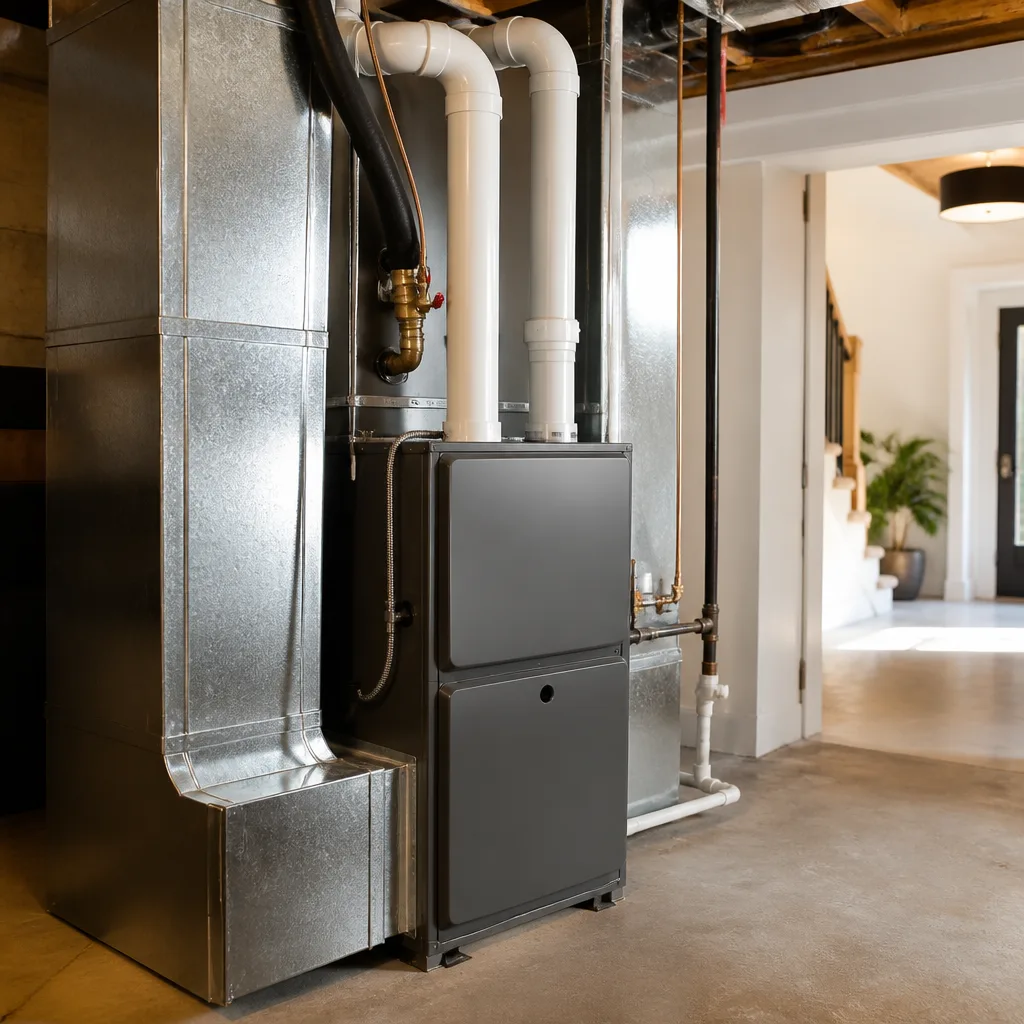
 Furnace & heating
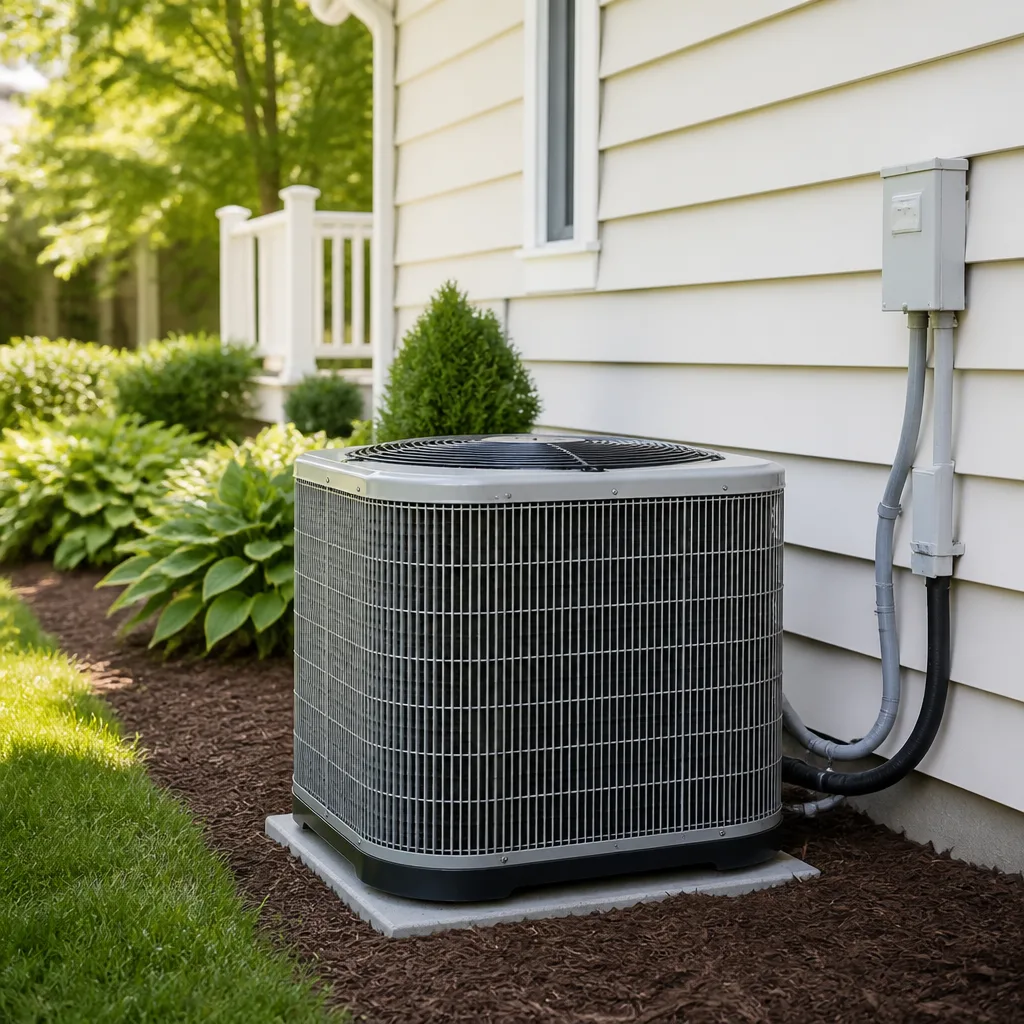 AC repair
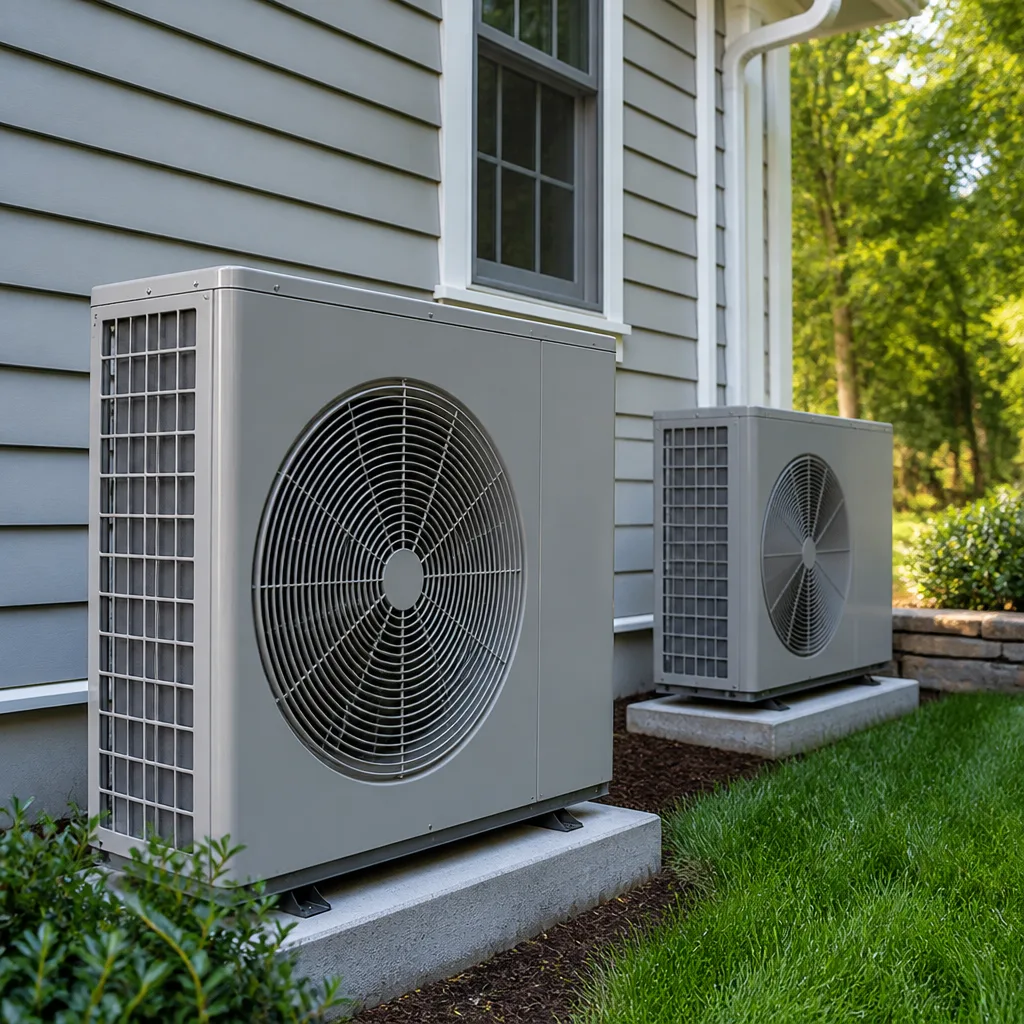 Heat pumps
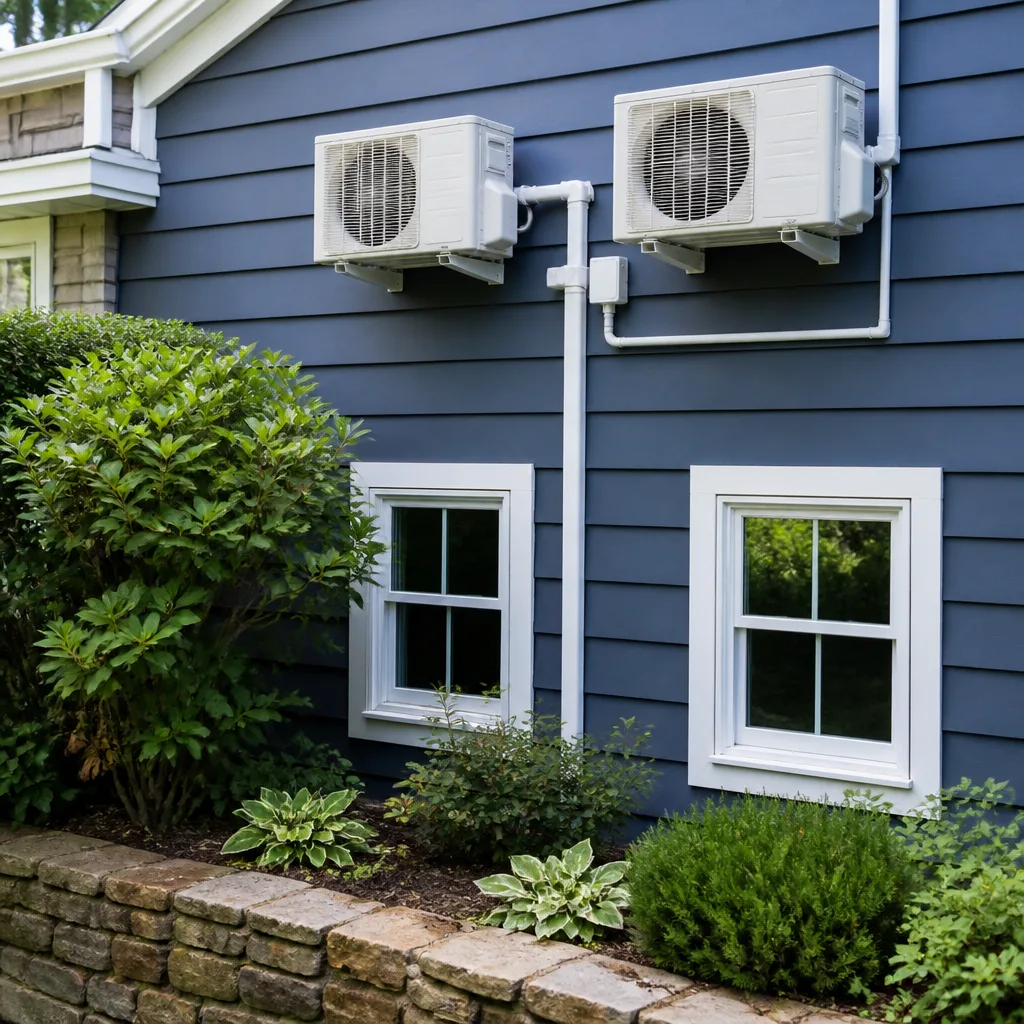 Ductless mini splits
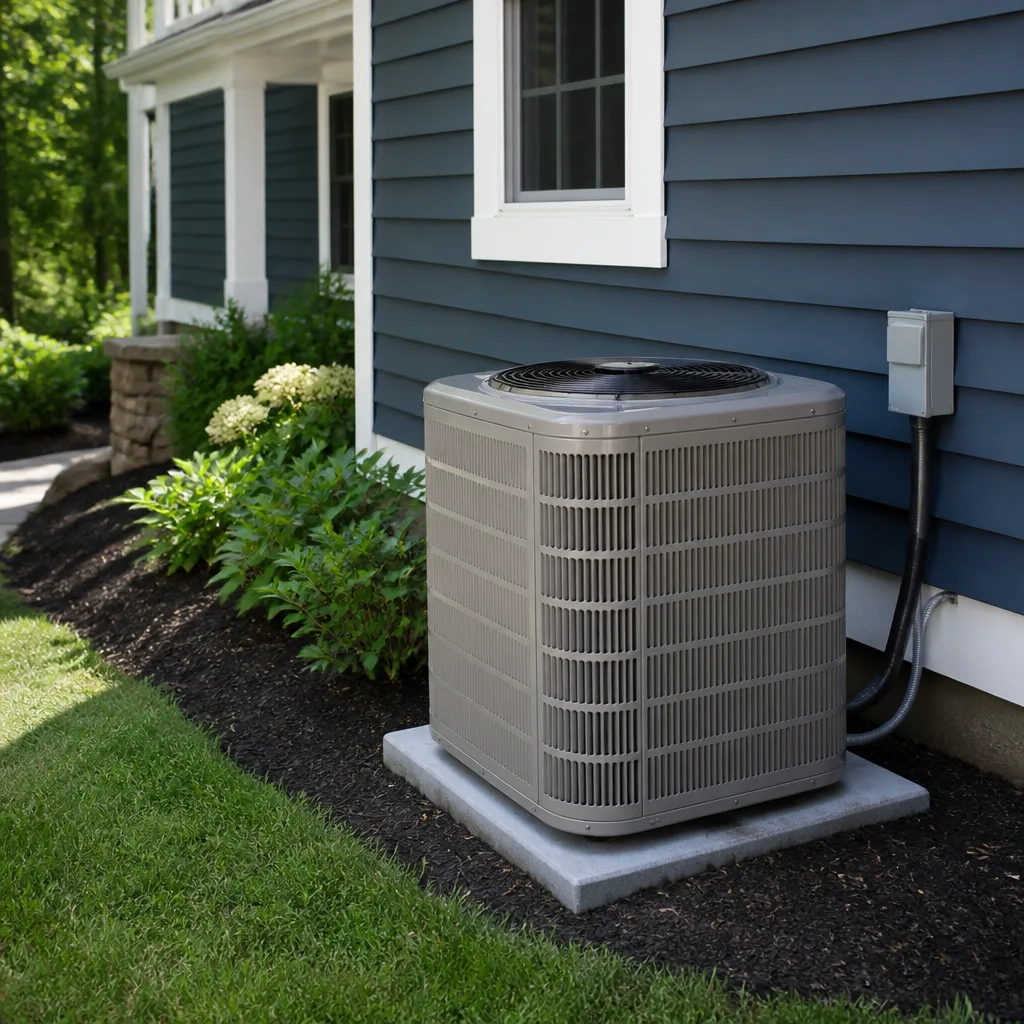 Carrier
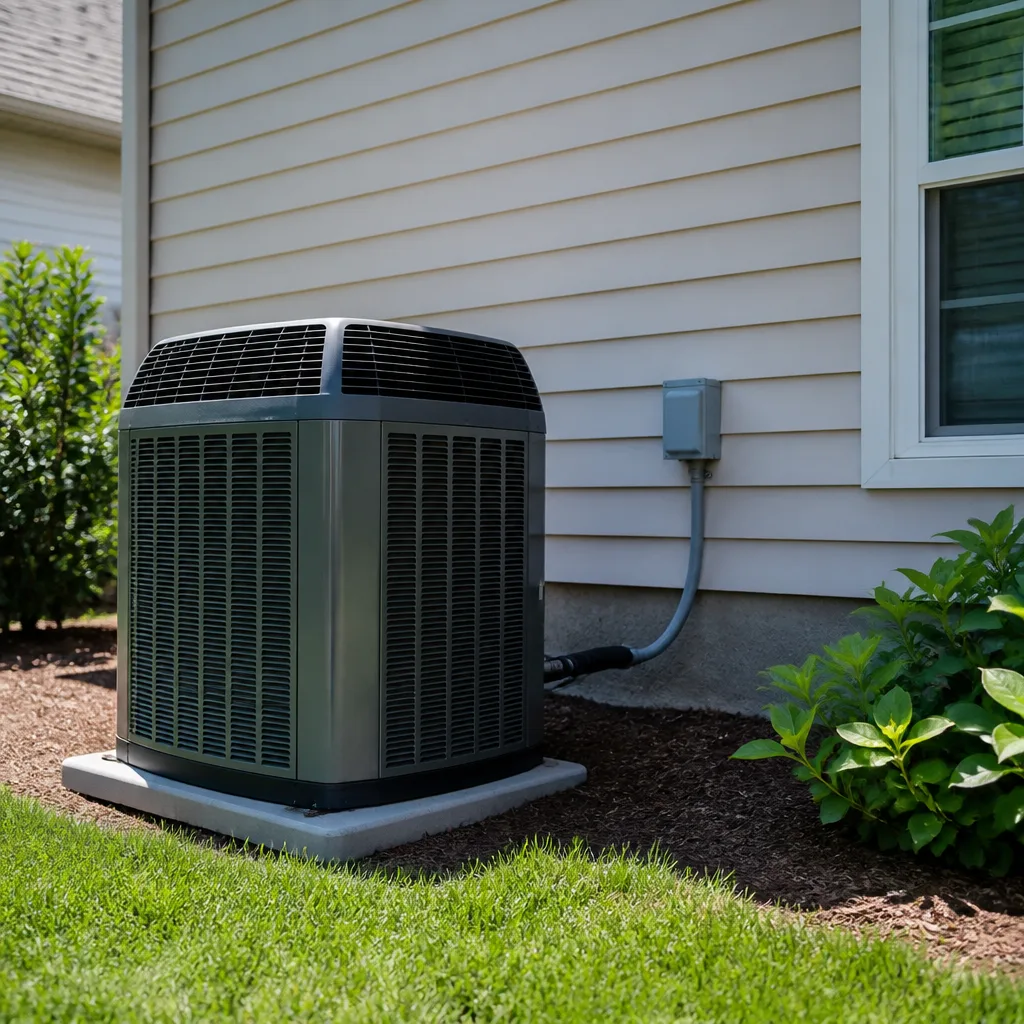 Trane
Trane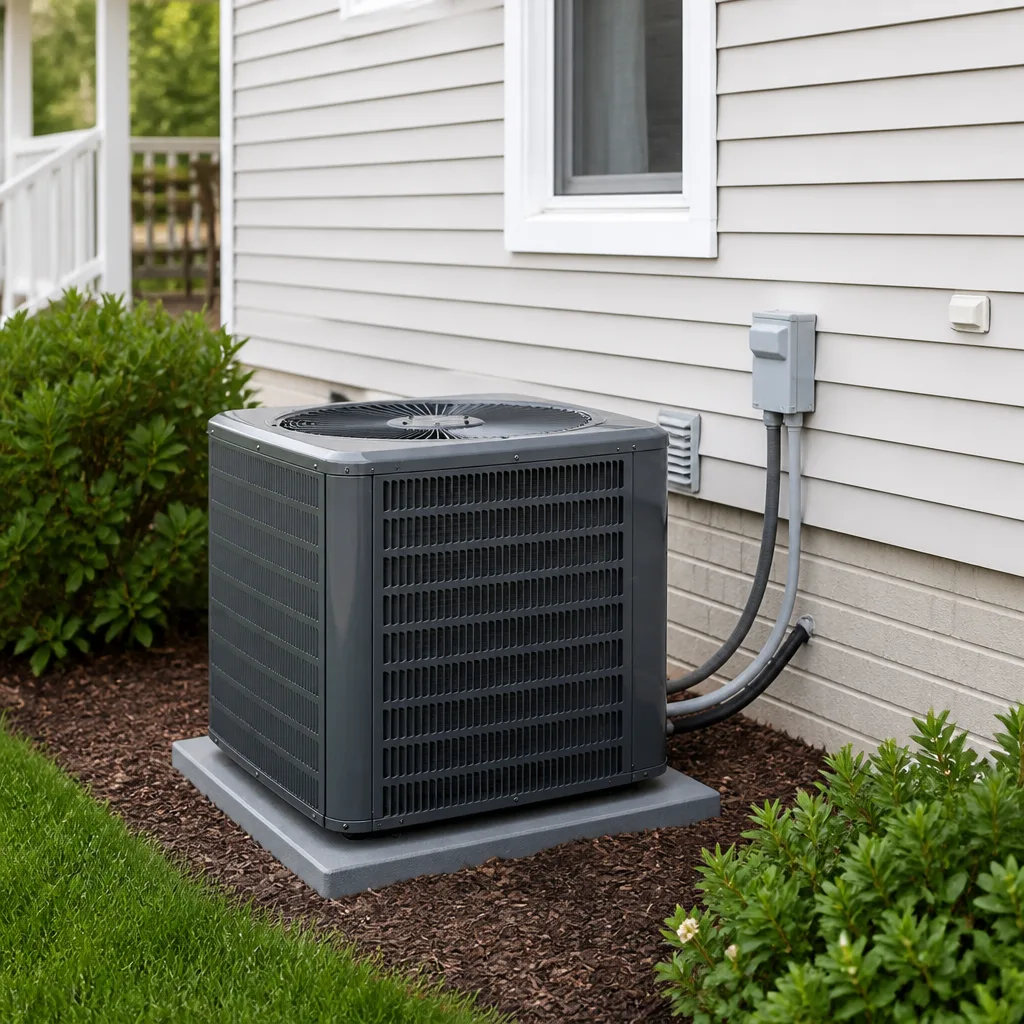 Goodman
Seasonal tune-up and full diagnostic on your Carrier, Trane, or Goodman system - readings shown to you before any repair is proposed
Diagnosis first, numbers second - you approve the repair price before a single part goes in.
Get your free estimateFast, Reliable Furnace Repair Across Castle Hills
Furnace repair in Castle Hills, TX typically costs between $150 and $700, with most single-component failures like ignitors, flame sensors, or blower capacitors landing in the $180 to $340 range. We get calls from Castle Hills homeowners almost daily during the first cold snap, when furnaces that have sat idle through a long South Texas summer finally get switched on. If your furnace is blowing cold air, short cycling, or making a rumbling noise from the burner area, call (254) 271-2545 and a live person will answer, 24 hours a day. We know the houses here: the pier-and-beam foundations, the original round ductwork, the tight closets that make every repair a little more deliberate.
Why Meadowsweet Heating and Air San Antonio Is Castle Hills’s Preferred Furnace Repair Company
Castle Hills was built as a custom-home community in the 1950s and 60s, and that history shows up in every mechanical closet we open. The homes are beautiful, but their original HVAC spaces were designed for furnaces that are long gone. A technician who only knows modern tract housing will struggle with a mid-century ranch off West Avenue. Our crews have been inside enough Castle Hills homes to know what to expect before we arrive: shallow attic clearances, round metal ducts that don’t match modern plenums, and original gas lines sized for equipment from another era.
Every Castle Hills job comes with the Cedarwell Care Promise. That means a written price before any work starts, background-checked uniformed technicians, and a 365-Day Done Right Promise that stands behind the repair. Luis Serrano leads the team, and the standard he sets is simple: leave the house the way you’d want your own mother’s house left. Shoe covers and drop cloths go down on every visit, and a photo of the clean-up is sent before the crew pulls out of the driveway. No upsell, no fine print.
When you call about a furnace that won’t light on a 38-degree Castle Hills morning, you want someone who knows the difference between a bad ignitor and a gas valve that’s not getting enough pressure from an undersized 1957 gas line. Our Furnace Repair team can tell you over the phone what’s likely happening and what it may cost before we even roll the truck.
Styles & brands we work with
Gas Furnace Repair in Castle Hills
Gas furnace repair in Castle Hills usually falls between $150 and $700, depending on whether the failure is a $40 flame sensor, a $300 inducer motor, or a $600 gas valve. Most homes here run natural gas furnaces from Carrier, Trane, Goodman, or Rheem, and the age of the equipment is less important than what’s happening around it. In Castle Hills, the most common call we get is a furnace that lights, runs for a few minutes, and then shuts down before the house gets warm. That’s almost always a limit switch trip caused by poor airflow from aging ductwork, a dirty blower wheel, or a return-air box that was never sized correctly for the equipment.
Safety matters here and we won’t skip it. Gas furnaces involve combustion, carbon monoxide, and high-voltage components. If you smell gas, leave the house and call your utility first. For anything else, call us and we’ll walk you through what to check before the truck rolls.
Repairing Older Units, Not Just Replacing Them
Many Castle Hills furnaces are 15 to 25 years old, and plenty of them still have life left. A cracked heat exchanger does mean replacement, but a failing ignitor, a weak capacitor, or a dirty burner assembly is a repair. We’ll tell you plainly if a $200 repair buys you another three winters, because that’s the honest answer in a lot of these mid-century homes.
What We Check On Every Call
Every gas furnace repair starts with combustion analysis and a visual inspection of the heat exchanger. In Castle Hills, we also measure static pressure because the original round metal ductwork in crawlspaces and tight attics is almost never delivering the airflow a modern high-efficiency furnace needs. If the furnace is tripping the rollout switch, the answer isn’t just replacing the switch, it’s finding out why the flame is rolling out. Often it’s a crushed duct or a restrictive transition fitting, not the furnace itself.
Furnace Tune Up in Castle Hills
A furnace tune up in Castle Hills runs $80 to $200 and is the single best way to avoid a no-heat call on the first genuinely cold night of the year. South Texas furnaces sit dormant for eight or nine months, and in that time dust settles on the burners, spiders build nests in the orifice tubes, and the blower wheel gets coated in a film that throws off airflow. We recommend scheduling a tune-up in October or early November, before the first hard freeze around Castle Hills.
Our tune-up is a real inspection, not a filter change and a wave. We check the heat exchanger for cracks, test the flame sensor, clean the burners, inspect the gas valve and connections, measure the temperature rise across the furnace, and verify that the condensate drain on high-efficiency units is flowing. You get a written report of what we found and what it means. Technicians are not paid on what they sell, so there’s no pressure to replace something that’s working.
The Annual Tune-Up Before Winter
For families in Castle Hills with kids and pets, the furnace tune-up also protects indoor air. A dirty blower wheel circulates whatever is in the return air stream; a cracked heat exchanger is far worse. One hour of maintenance in October can prevent a 2 a.m. emergency call in January. We offer flat-rate tune-up pricing so you know the number before you book.
What A Tune-Up Catches Early
In Castle Hills specifically, our tune-ups catch a lot of corroded sediment traps on original 1950s gas lines. Those traps fill with pipe scale and restrict gas flow enough that the burners won’t stay lit under load. Catching that in a $120 tune-up is a lot cheaper than diagnosing it at midnight during a cold front.
Trusted Brands We Service in Castle Hills
We service furnaces from Carrier, Bryant, American Standard, Daikin, and five other major brands, and we keep a running stock of common ignition components, blower capacitors, and pressure switches for Castle Hills calls. Because so many homes here have original equipment closets that were never designed for modern high-efficiency units, we also keep custom transition fittings and sheet metal stock on the trucks. That means a repair that might take another company two trips and a special-order part is often done same-day for our Castle Hills customers. Carrier and American Standard are the brands we see most often in the original 1950s and 60s Castle Hills builds, and we know their older models well.
Common Furnace Repair Problems We See in Castle Hills Homes
- Rollout switch failure from crushed round ductwork. The original metal ducts in pier-and-beam crawlspaces get stepped on, crushed, or separated over 60 years. The furnace senses restricted airflow, the rollout switch trips, and the burners shut down. Fixing the duct, or building a custom transition fitting, is often the real repair, not just replacing the switch.
- Undersized gas lines causing flame faults. Many original Castle Hills gas lines were sized for a 60,000 BTU furnace with a standing pilot. A modern high-efficiency furnace can need 20 to 30 percent more gas flow, and a corroded sediment trap makes it worse. The result is a furnace that lights and then drops the flame signal within seconds.
- Side-return airflow starvation cracking heat exchangers. Shallow attic clearances force installers to use side-return configurations that the factory plenum wasn’t designed for. Starved for air, the furnace overheats, and over several winters that thermal stress cracks the heat exchanger. In a Castle Hills home, if the furnace has been replaced but the return air box wasn’t rebuilt, this is the failure waiting to happen.
- Short cycling thermostats on unbalanced floor plans. A single-zone thermostat in a long mid-century ranch reads only the hallway. The back bedrooms stay cold, the living room overheats, and the furnace cycles on and off every few minutes. We see this constantly in Castle Hills, and sometimes the repair is relocating the thermostat or adding a return vent, not touching the furnace at all.
See the difference
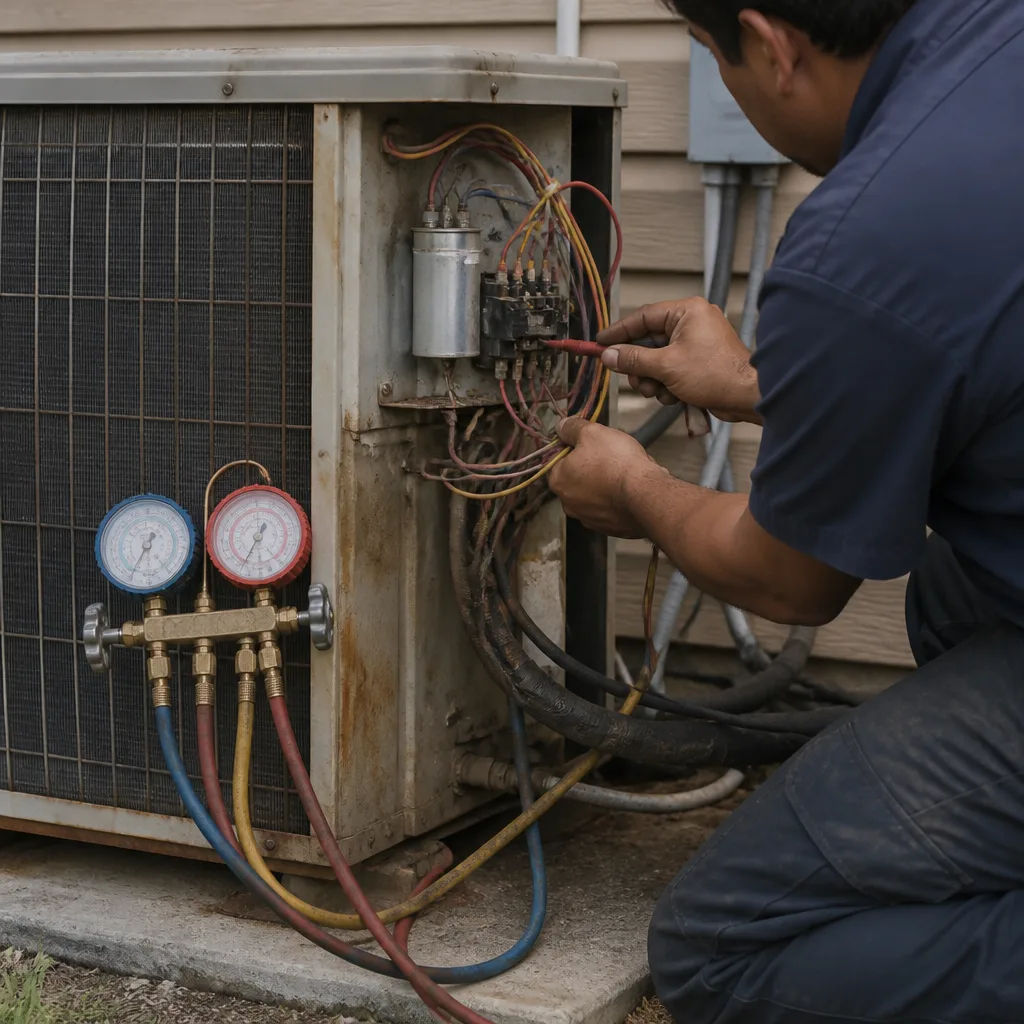 Before
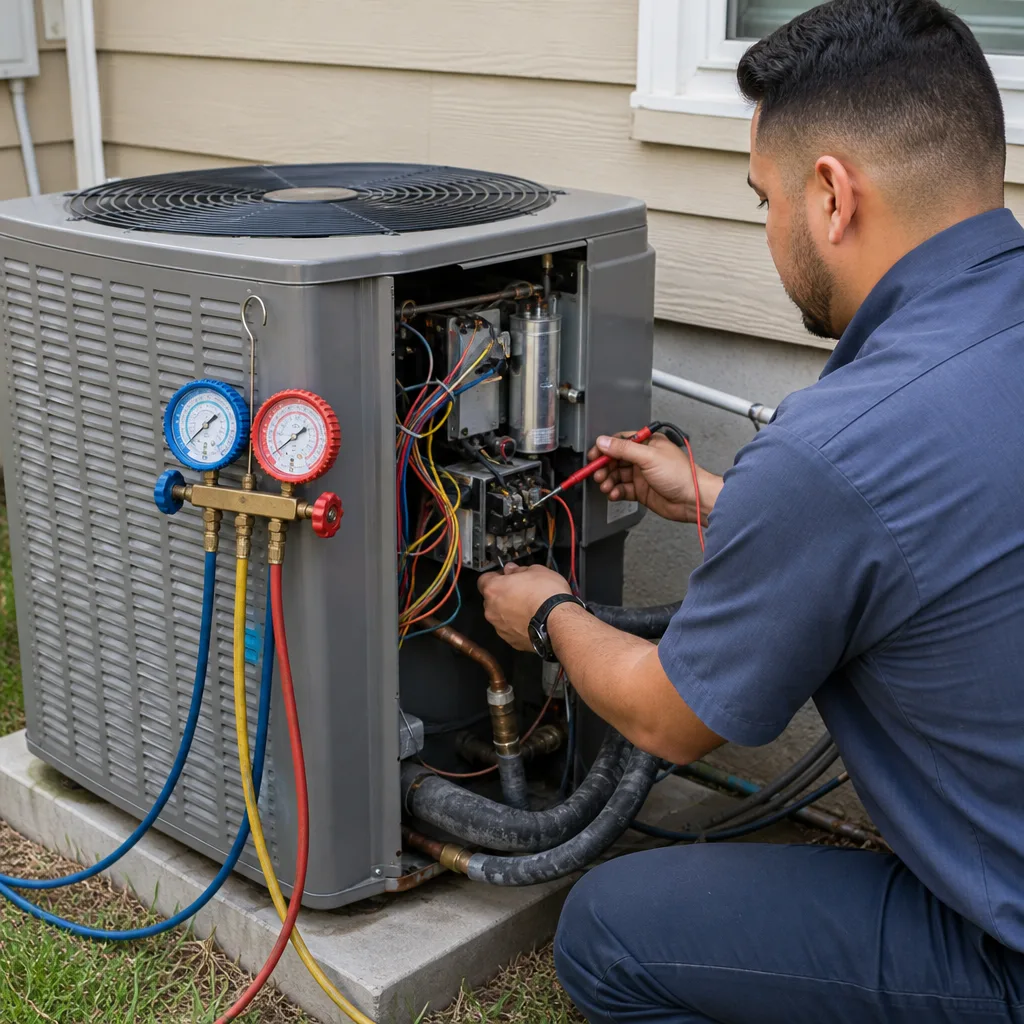 After
After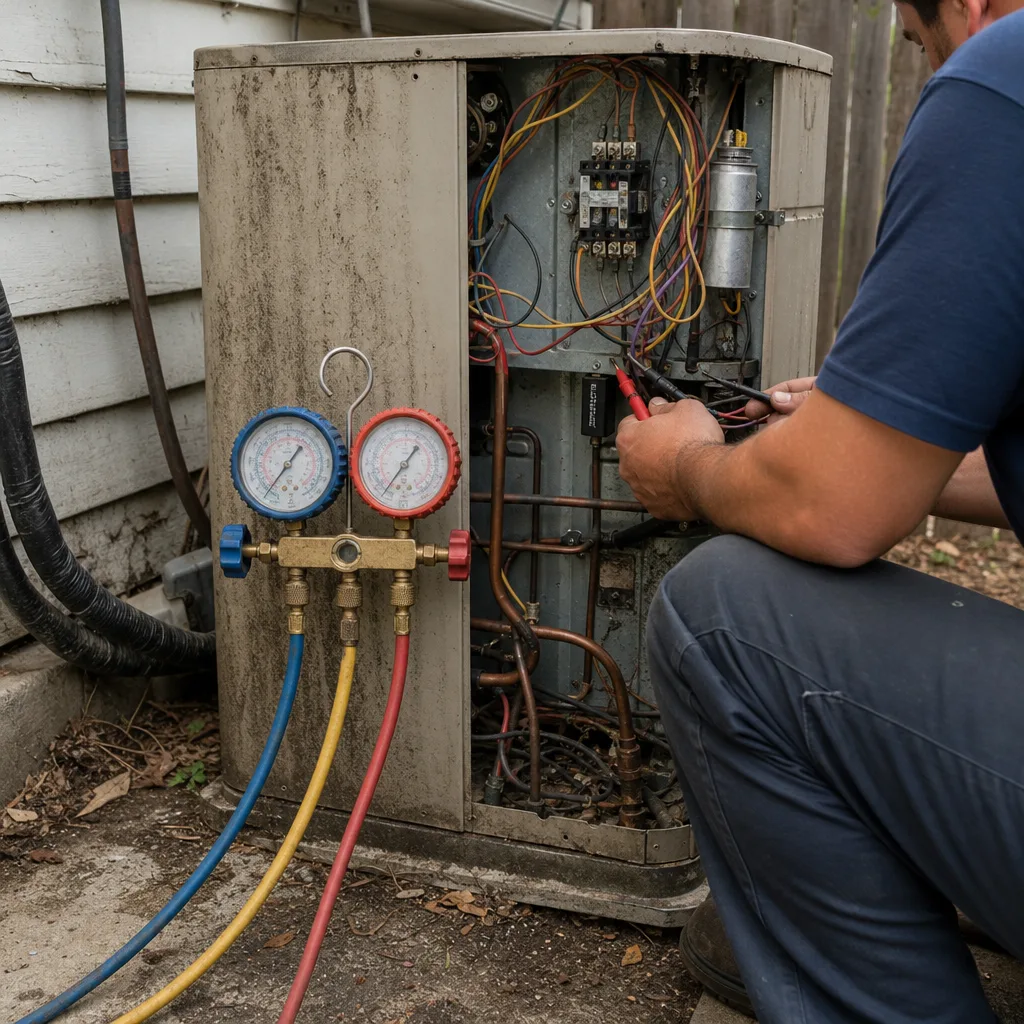 Before
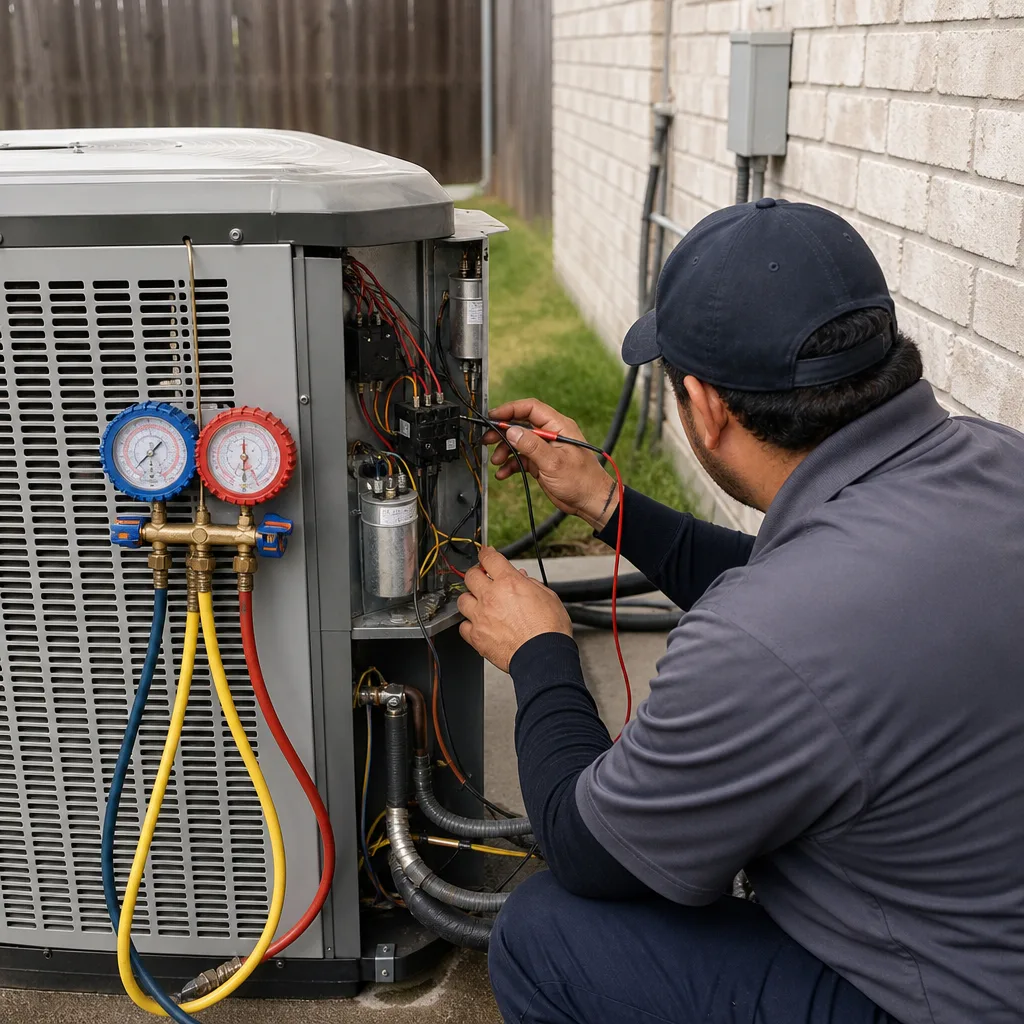 After
After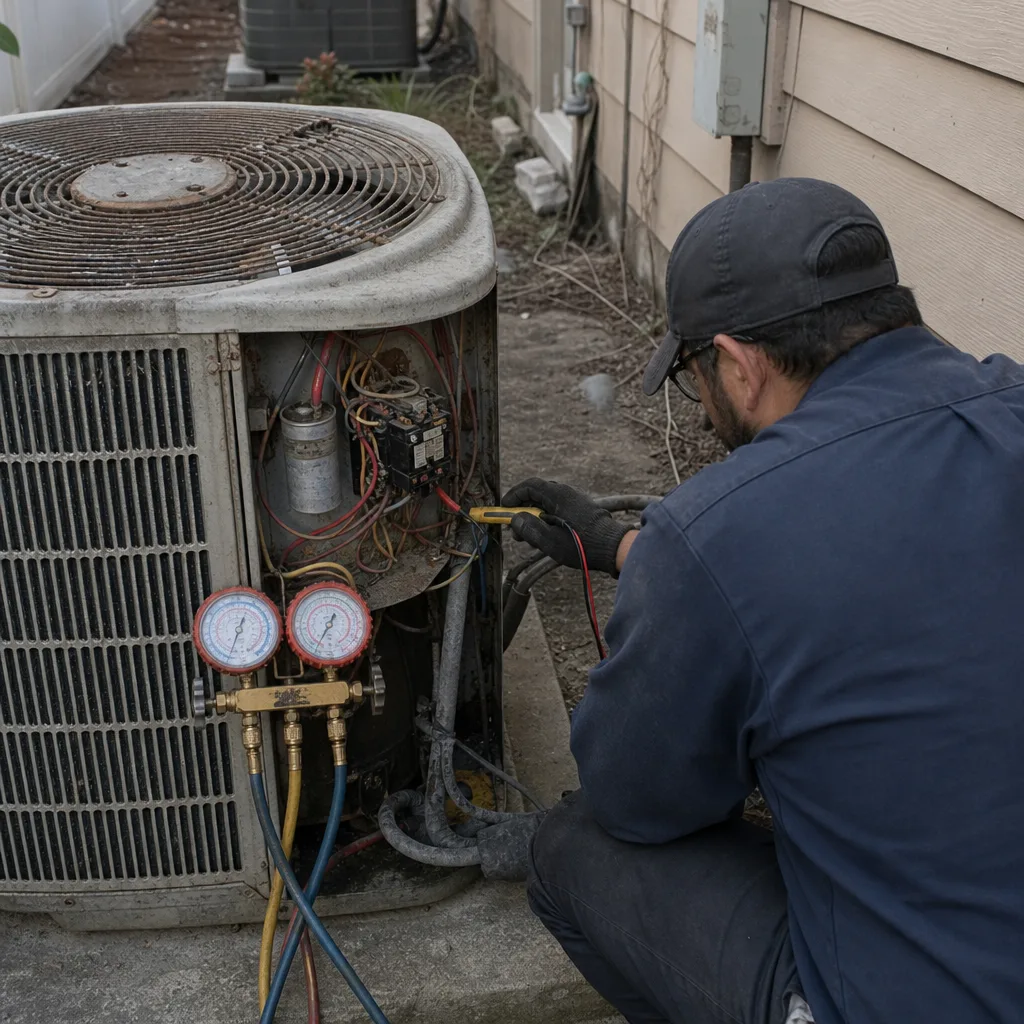 Before
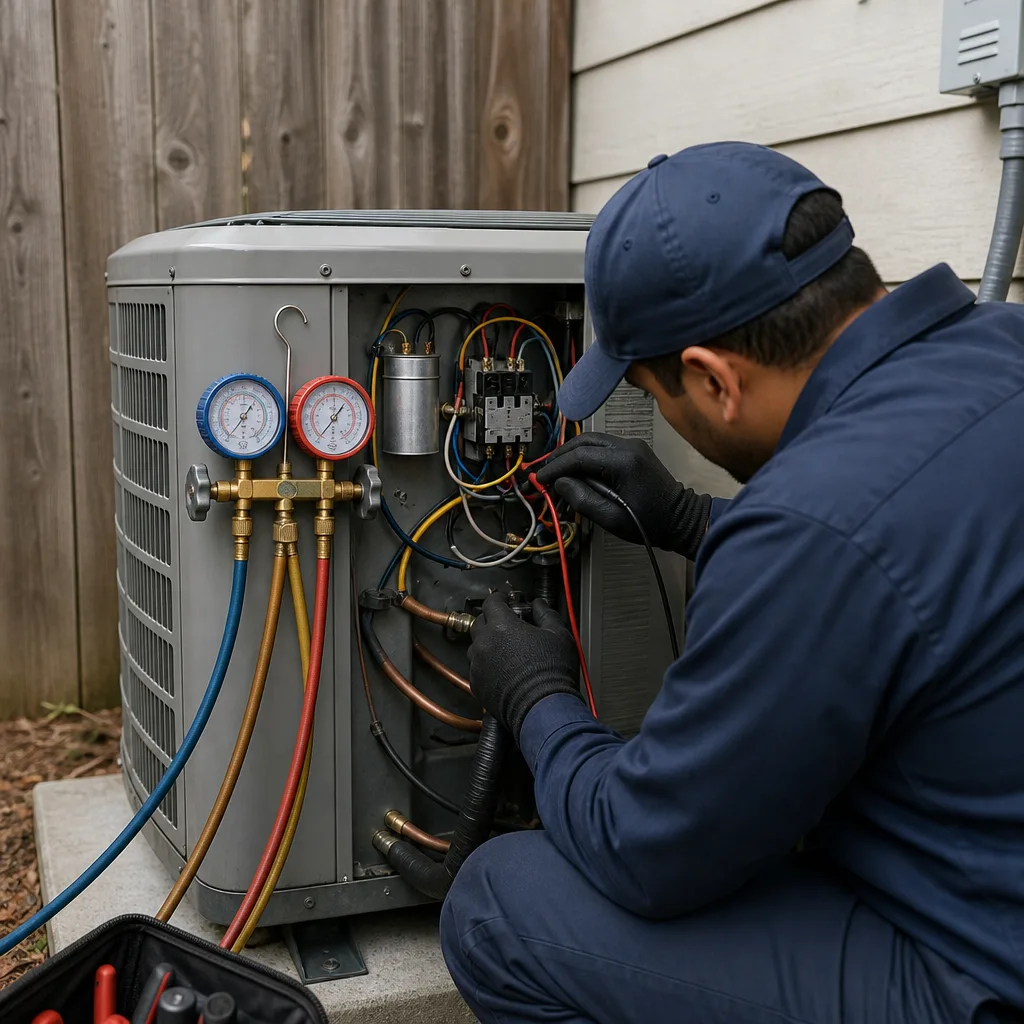 After
AfterPricing for Furnace Repair in Castle Hills, TX
Furnace repair in Castle Hills is priced honestly and up front. Most repairs fall between $150 and $700, and you’ll get a written price before any work starts, every time. Here’s the line-item breakdown:
| Service | Price Range |
|---|---|
| Furnace Repair | $150 – $700 |
| Furnace Tune Up | $80 – $200 |
The variables that move a Castle Hills repair toward the top of the range are the age of the unit, whether the ductwork needs custom fabrication to restore airflow, and whether multiple components failed at once. A $35 ignitor is a quick fix; a $600 gas valve replacement on a furnace that also needs a new inducer motor is a bigger day. Whatever the number is, you’ll see it in writing before we start. Estimates are free. Call (254) 271-2545 for an exact quote.
We Also Serve Cities Near Castle Hills
While this page focuses on furnace repair in Castle Hills, our crews also serve the surrounding communities: San Antonio, New Braunfels, Converse, and Live Oak. If you’re just outside the Castle Hills city limits, call us and we’ll get you on the schedule. See our full Furnace Repair in Castle Hills coverage for neighborhood-level details and response times.
A Word About Castle Hills’s Original Homes
Castle Hills was built as a custom-home neighborhood, not a tract development, and that changes everything about furnace repair here. The original 1950s and 60s homes have tight mechanical closets and shallow attic clearances that simply don’t accommodate a modern furnace in a like-for-like swap. Off-the-shelf rectangular plenums won’t fit the footprint. The original round metal ductwork, tucked into tight crawlspaces on pier-and-beam foundations, doesn’t match the rectangular openings on a new unit. So a “simple” furnace repair often becomes a custom fabrication job: building a transition fitting on-site, reworking the return-air box, or rerouting duct to restore proper static pressure.
We recently repaired a Carrier gas furnace in a ranch home off West Avenue in Castle Hills where a failing blower motor capacitor had tripped the limit switch. The original round metal ductwork in the pier-and-beam crawlspace forced us to build a custom transition fitting on-site to restore proper static pressure, and we recalibrated the thermostat to stop short cycling before leaving. That’s the difference between a tech who swaps parts and a company that understands why the part failed in the first place. In Castle Hills, the why is almost always the house itself.
That’s why a like-for-like swap often disappoints in an older Castle Hills home. You put a new high-efficiency furnace into a duct system that was marginal for the original 60,000 BTU unit, and the new furnace chokes. Static pressure climbs, the heat exchanger runs hot, and the furnace’s own safeties shut it down. Or worse, the heat exchanger cracks early. We will not install a furnace that the house can’t support. Sometimes the right repair is fixing the ductwork and keeping the existing furnace. Sometimes it’s a smaller furnace with a better-matched blower. We’ll tell you which one it is, in plain language, with numbers.
Serving Castle Hills, TX - Our Local Coverage Area
We’re based in the Castle Hills area and know this community well. Use the map below to see our service coverage - if you’re nearby, we can almost certainly help.
FAQs About Furnace Repair in Castle Hills
Most original Castle Hills furnace closets were framed for 1950s and 60s units that were shorter, narrower, and vented differently than today’s high-efficiency furnaces. The closet depth is often too shallow for a modern cabinet, the platform or return plenum is sized for old equipment, and there’s no easy path for PVC venting. A like-for-like swap usually requires rebuilding the closet platform, rerouting gas and venting, and fabricating custom duct transitions. That’s a replacement job, not a repair, and we’ll show you exactly what has to change before we quote it.
In many cases, yes. The round metal ductwork in Castle Hills crawlspaces is often still serviceable; the problem is usually at the connection points, where crushed or separated sections are choking airflow. We can fabricate custom transition fittings on-site to mate the old round ducts to a modern furnace’s rectangular opening, and we can repair collapsed sections in the crawlspace without tearing out the whole system. Full duct replacement is rarely necessary on a repair call. Call (254) 271-2545 and we’ll tell you honestly what your ducts need.
Heat exchangers crack from thermal stress, and in Castle Hills the most common cause is airflow starvation. The original round metal ducts, restrictive return-air boxes, and side-return configurations forced by shallow attics all reduce airflow across the heat exchanger. The metal runs hotter than it should on every cycle, and over five to ten winters it cracks. A cracked heat exchanger is a safety issue, not a repair item, and we’ll show you the crack and walk you through replacement options before any work is quoted.
A high-velocity system can make sense for some Castle Hills homes, particularly ones where the original round ductwork has failed beyond repair or where shallow attics and tight closets make conventional replacement difficult. High-velocity systems use small-diameter flexible tubing that fits through existing wall cavities, so you don’t rip out ceilings or soffits. But it’s not a repair, it’s a system replacement, and it’s not right for every house. If you’re weighing repair versus high-velocity replacement, call us for a straight assessment. We’ll measure static pressure, inspect the existing ducts, and tell you what’s salvageable.
Sometimes, yes. Many original Castle Hills homes still run 100-amp or even 60-amp electrical service, and newer furnaces, especially high-efficiency models with ECM blower motors, pull more startup current than the panel was designed to handle. We check the breaker size, wire gauge, and panel capacity as part of every repair that involves a blower motor, inducer motor, or control board. If a panel upgrade is needed, that’s a licensed electrician’s job, and we’ll coordinate the timing so your furnace is down for as little time as possible. For a free estimate on your Castle Hills furnace, call (254) 271-2545.
Call Meadowsweet Heating and Air San Antonio today at (254) 271-2545 for fast, honest furnace repair in Castle Hills. A live person answers 24/7, and every estimate is free.
Written by Luis Serrano, Owner at Meadowsweet Heating and Air San Antonio, serving Castle Hills and surrounding communities.