
 Furnace & heating
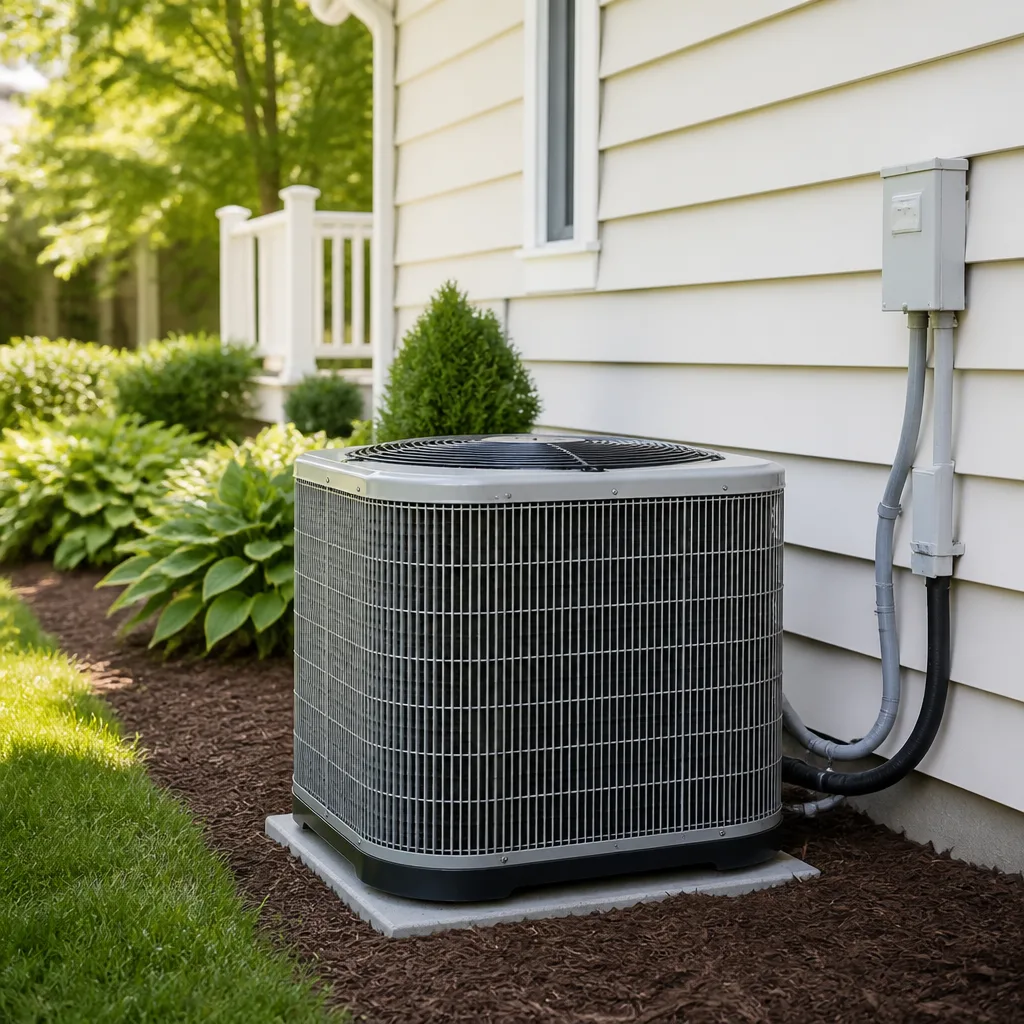 AC repair
 Heat pumps
 Ductless mini splits
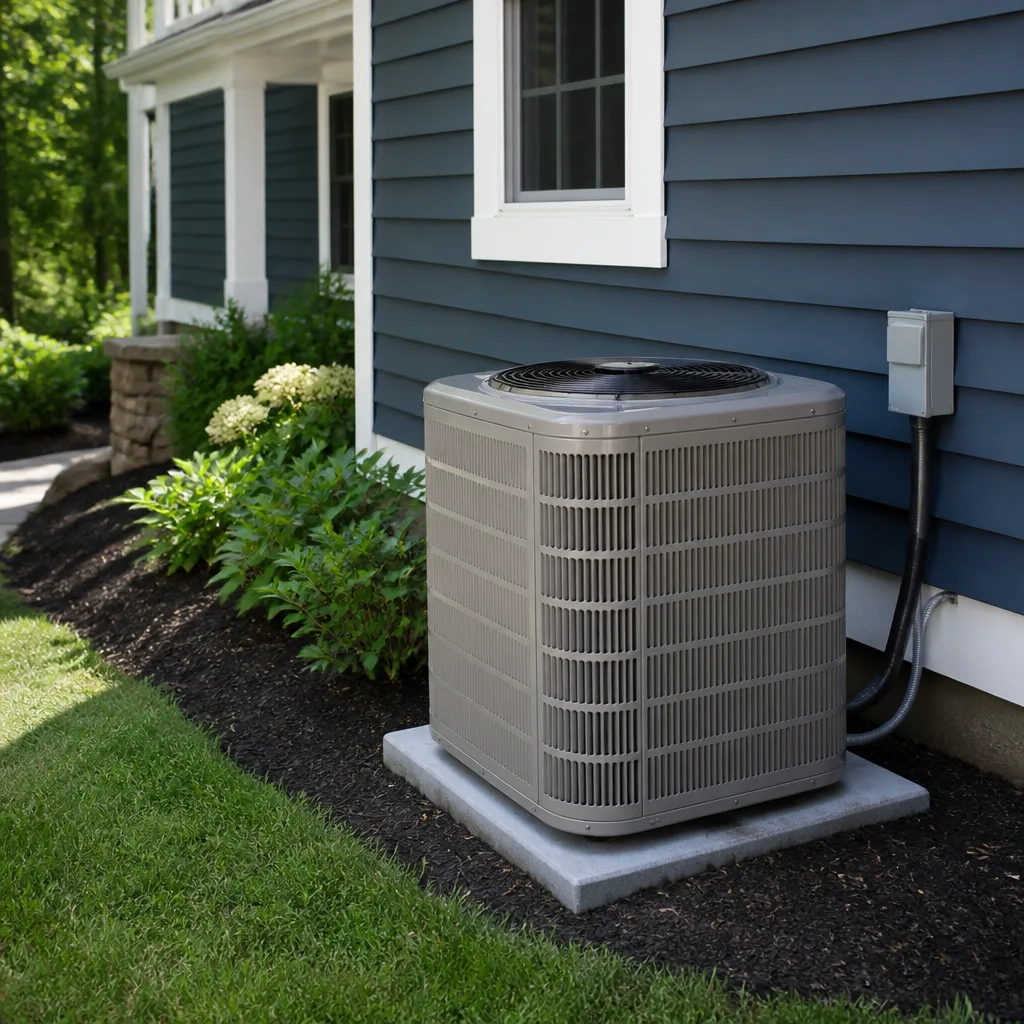 Carrier
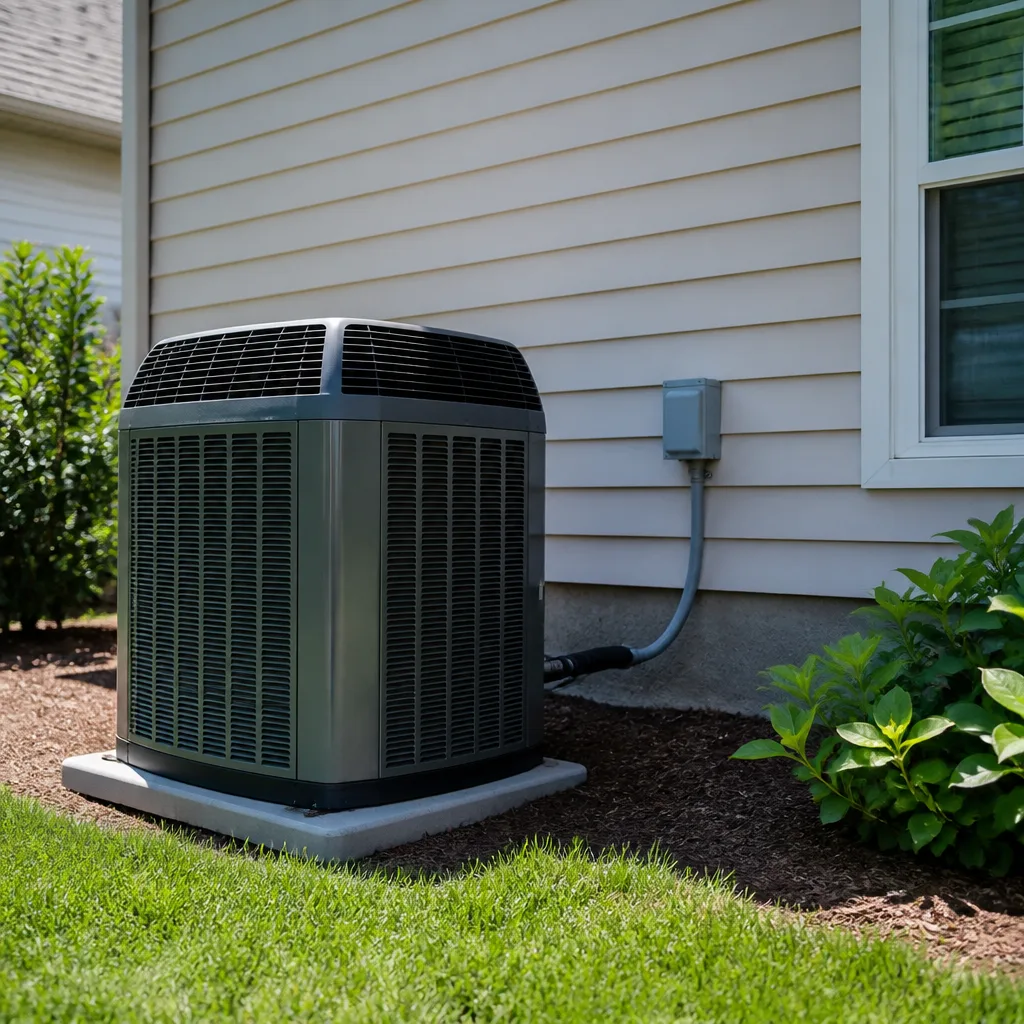 Trane
Trane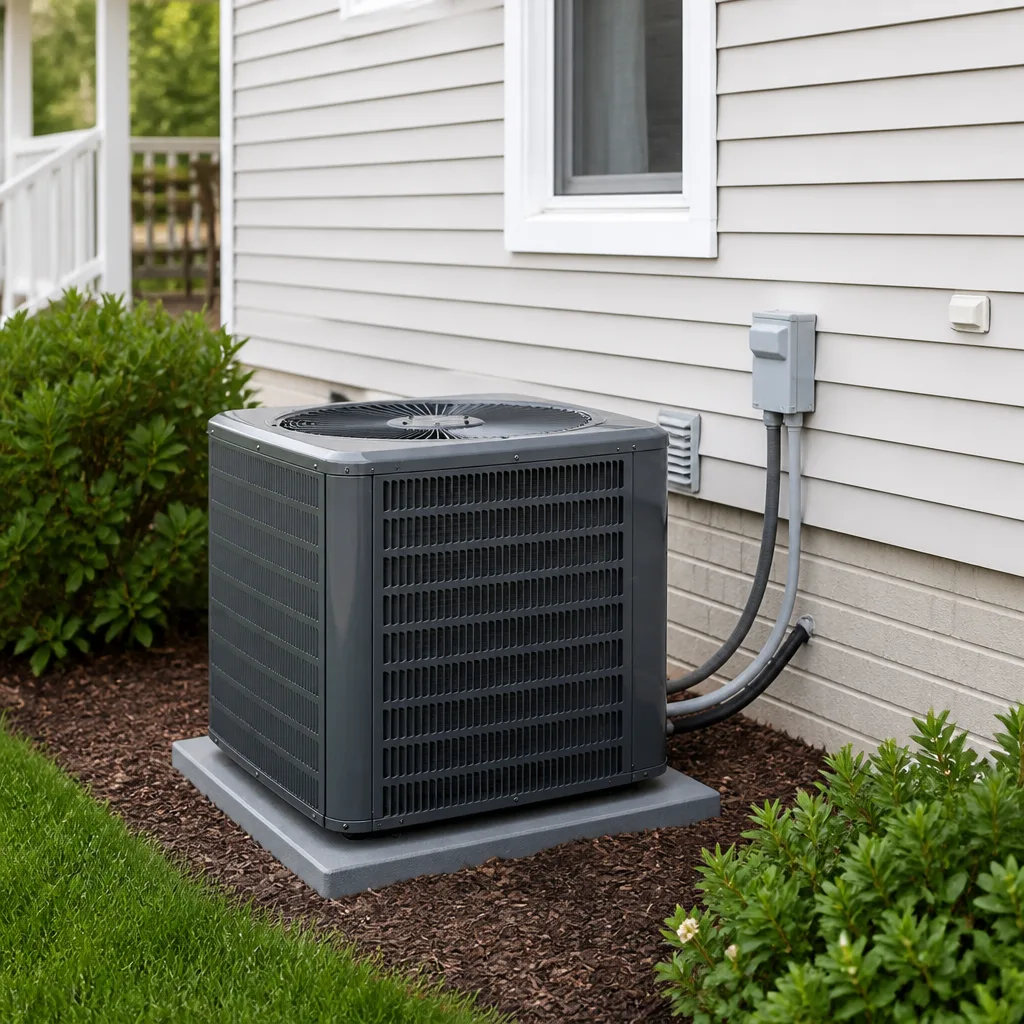 Goodman
Seasonal tune-up and full diagnostic on your Carrier, Trane, or Goodman system - readings shown to you before any repair is proposed
Diagnosis first, numbers second - you approve the repair price before a single part goes in.
Get your free estimateTrane Capacitor Replacement: The San Antonio Owner’s Guide
A Trane capacitor replacement in San Antonio typically runs $180 – $340 installed, depending on whether it’s a single or dual-run capacitor and how accessible your condenser unit is. We keep Trane-compatible capacitors on our trucks, and most replacements are done same-day, usually within an hour of diagnosis. Most owners discover the problem when the outdoor unit hums but the fan won’t spin, or when the compressor clicks and won’t start on a 98-degree afternoon.
Capacitors are the workhorse starting component in your Trane’s outdoor condensing unit. San Antonio heat is hard on them. That’s not a sales pitch, it’s a materials reality: capacitors are filled with a dielectric fluid that degrades faster when ambient temperatures sit above 95 degrees for weeks on end. We replace more Trane capacitors in July and August than in all other months combined.
Which Trane Models This Applies To
If you have a Trane XR series, XL series, or XB series condenser, your unit uses either a single-run capacitor, a dual-run capacitor, or in some newer variable-speed models, a capacitor bank paired with an inverter board. The XL18i and XV20i variable-speed units are the exception: they don’t use a traditional start capacitor at all. That’s a critical distinction, because a generic “capacitor replacement” diagnosis doesn’t apply to them, and a technician who doesn’t know Trane’s lineup might sell you a part your system doesn’t need.
Here’s the checkable compatibility gotcha: Trane dual-run capacitors are almost always rated at 370 or 440 VAC, and the microfarad (µF) rating is stamped on the metal can. Common Trane specs are 35/5 µF, 40/5 µF, 45/5 µF, and 50/5 µF for dual-run applications. The compressor side and fan side have separate ratings, and they must match your unit’s label exactly. A 45/5 will not safely replace a 40/5. We match the capacitor to the data plate on your condenser, not to whatever the previous technician installed, because we’ve seen mismatched capacitors cause compressor overheating in San Antonio more times than we can count.
Styles & brands we work with
Signs Your Trane Capacitor Replacement Is Failing
- The outdoor unit hums but the fan doesn’t turn. The capacitor has lost enough microfarad capacity that it can no longer provide the starting torque the fan motor needs. You may be able to spin the fan by hand with a stick, which will sometimes get it going temporarily, but that’s a stopgap, not a fix.
- The compressor clicks on and off without actually running. That’s the compressor trying to start, failing, and tripping the thermal overload. Every failed start cycle stresses the compressor windings. In San Antonio’s summer, this is a genuine health risk for people without working AC, not just a comfort issue.
- The unit runs but the air from your vents isn’t cold. A weak capacitor may still spin the fan and start the compressor, but the compressor may be running inefficiently or cycling on thermal overload, which means it’s not cooling your home properly.
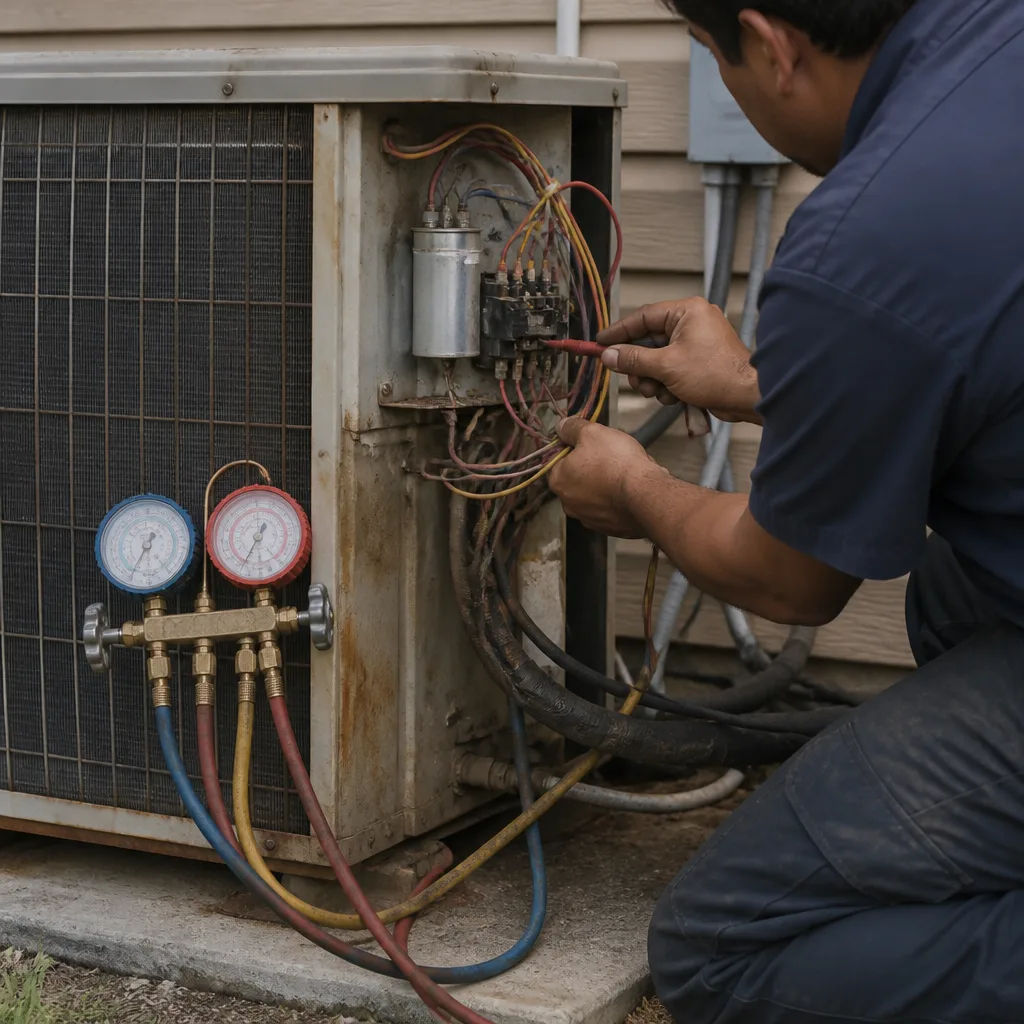
- The capacitor can is visibly swollen, bulging, or leaking fluid. This is the classic failure mode. The dielectric fluid inside breaks down from heat over time, pressure builds, and the aluminum can deforms. If yours looks bloated, replacement is due now, not later.
- Your AC worked fine yesterday and is dead today. Total capacitor failure is abrupt. You get no warning light, no error code. The part simply stops functioning, and the unit won’t start until it’s replaced.
See the difference
 Before
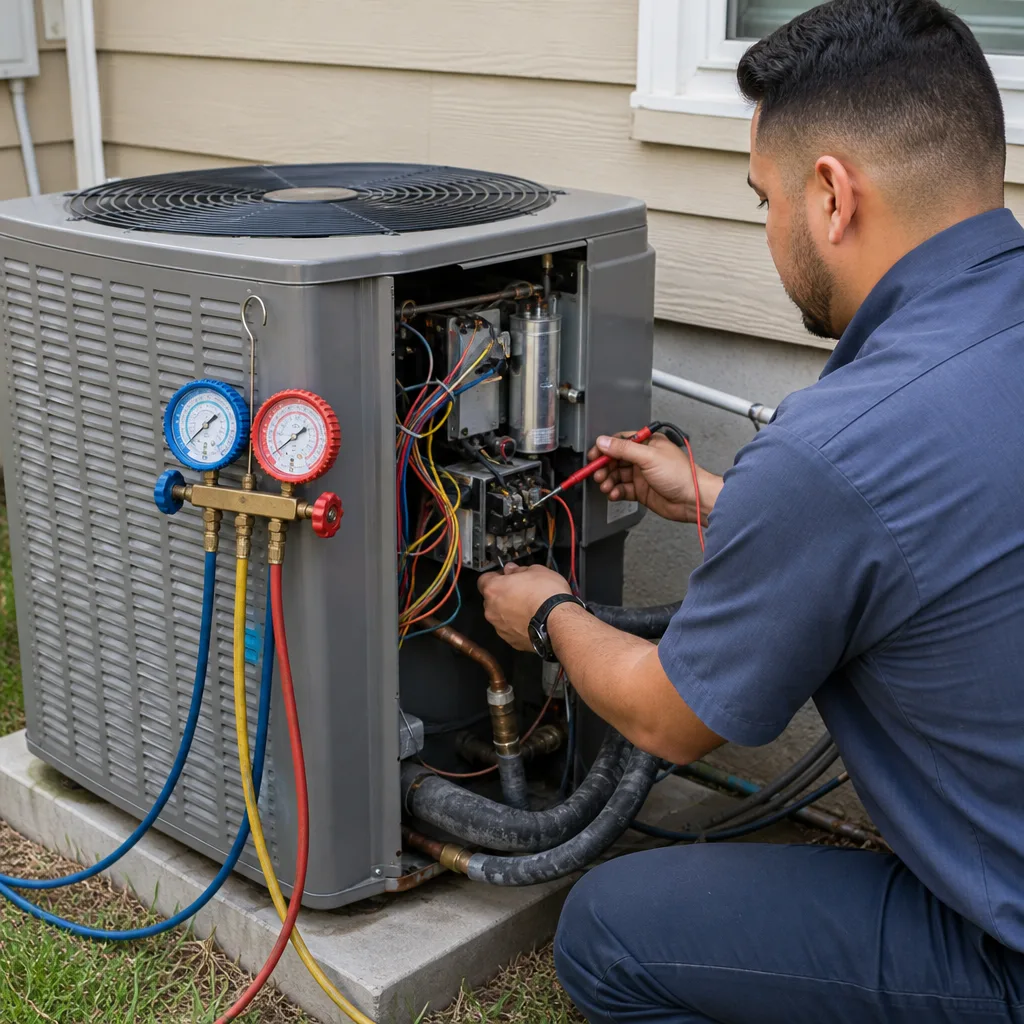 After
After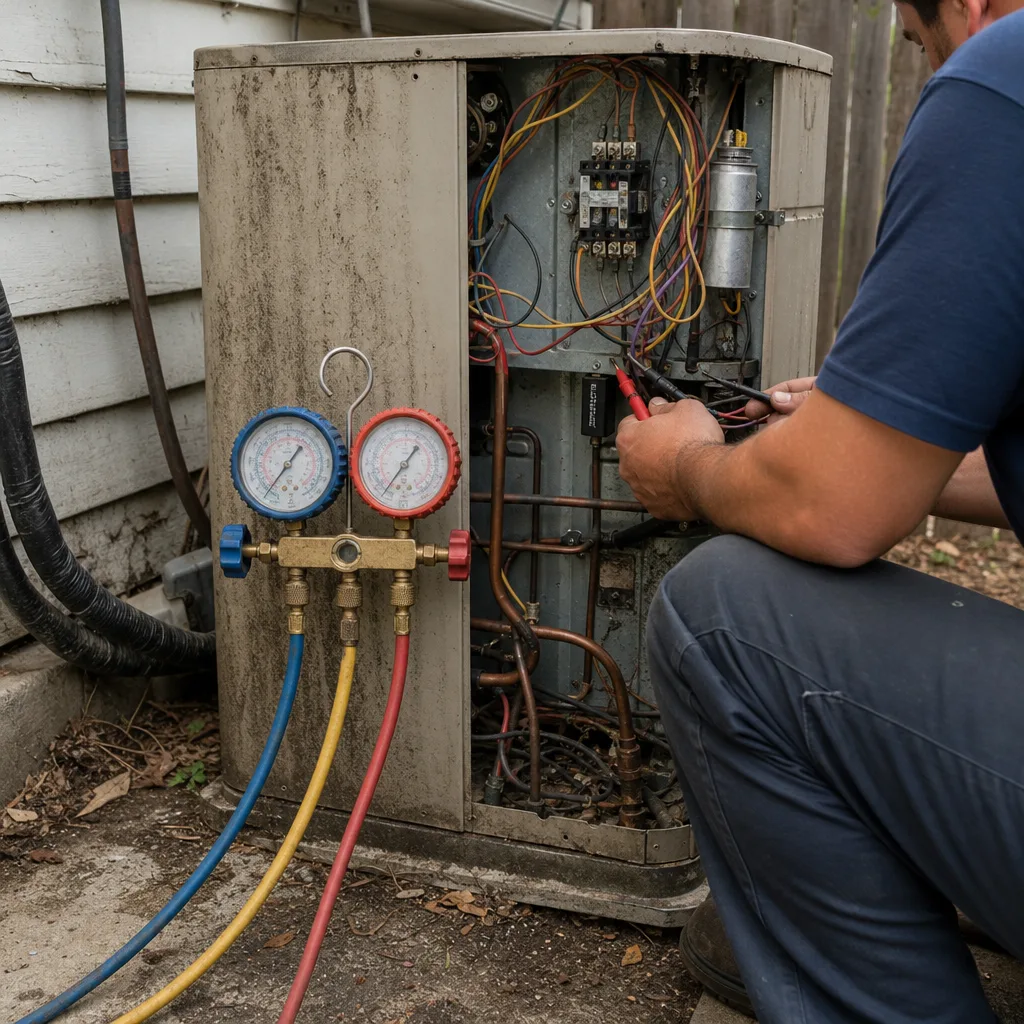 Before
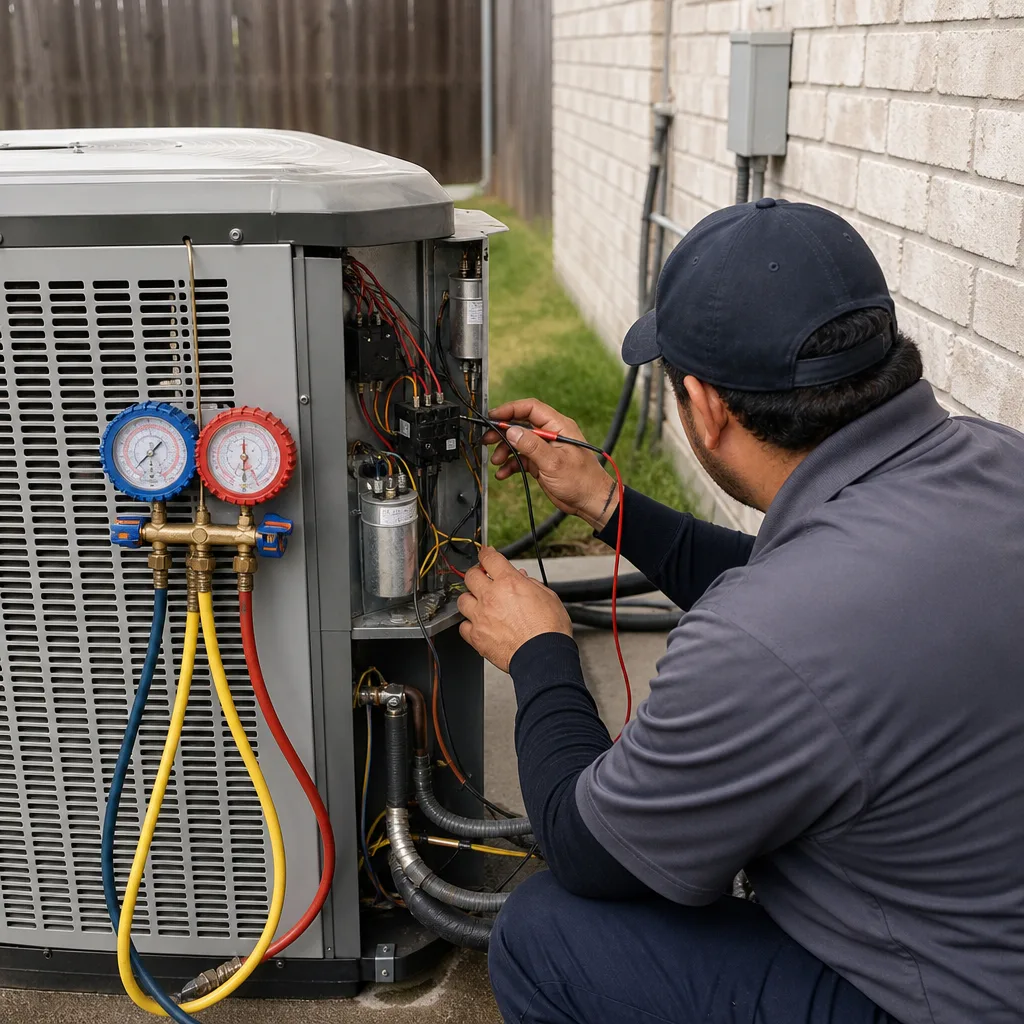 After
After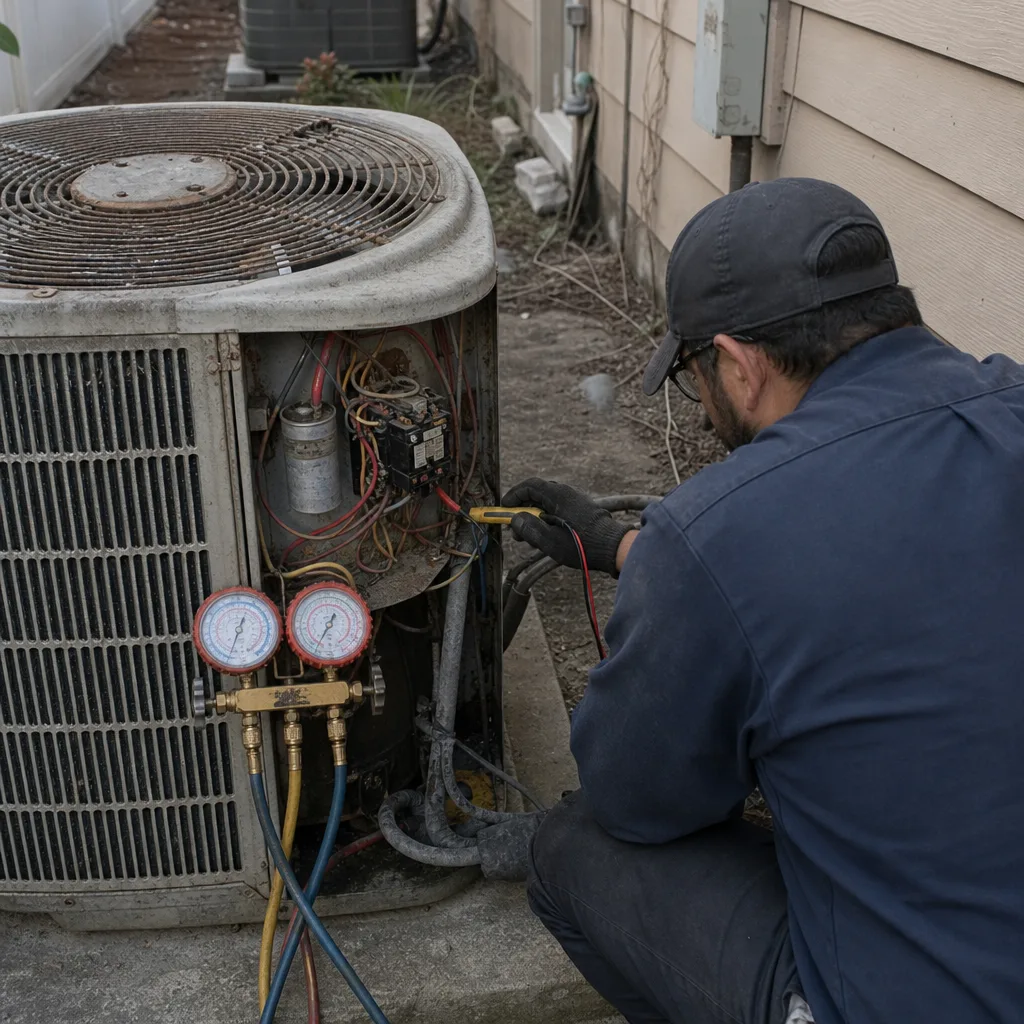 Before
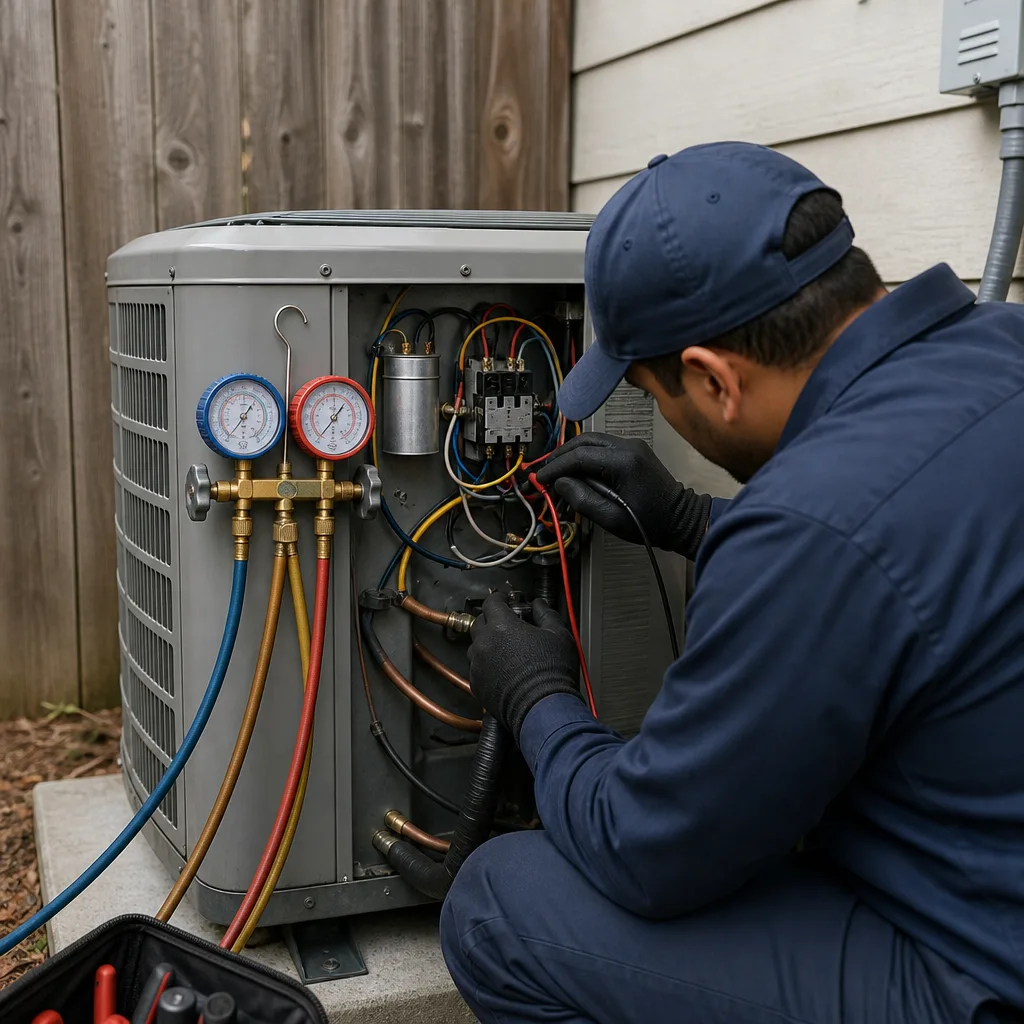 After
AfterReplacement Cost & What’s Included
Installed Trane capacitor replacement in San Antonio runs $180 – $340, which includes the part, the service call, the diagnostic time, and the labor to remove the old capacitor and wire the new one. Standard single-run capacitors run $180 – $240. Dual-run capacitors, which handle both the compressor and the fan motor, run $240 – $340 installed depending on the microfarad rating and whether we’re using a Trane OEM part or a quality aftermarket equivalent from a brand we trust.
The lower end of that range assumes a standard, accessible condenser on the side of the house. The higher end accounts for units that are harder to access, rooftop installations, or cases where the wiring terminals are corroded and need cleaning. You get a written price before we touch a single component, and the 365-Day Done Right Promise applies: if the capacitor fails within a year, we replace it at no charge. No fine print, no runaround.
DIY or Call Us?
Here’s the honest split. What you can safely do: visually inspect the capacitor through the condenser’s access panel and look for bulging or leakage. That’s it. Touching a capacitor without proper discharge is dangerous. A capacitor holds a charge even with the power off, and that residual charge can deliver a serious electrical shock. The capacitor in your Trane may be holding 370 to 440 volts. That’s not a household current; that’s a hazard.
What goes wrong when owners try to DIY this: they don’t discharge the capacitor, they install a capacitor with the wrong microfarad rating, they wire it backwards, or they leave the terminals loose and it arcs inside the unit. Every one of those mistakes is more expensive to fix than paying the diagnostic fee up front. If the fan is humming and won’t start, call us at (254) 271-2545. We’ll send a background-checked technician who will tell you what the capacitor costs, install it correctly, and show you the photo of the clean-up before we leave.
FAQs
A Trane capacitor in San Antonio’s climate typically lasts 5 to 10 years, though some fail in as few as 3 to 4 due to sustained summer heat exposure. The hotter the running environment, the faster the dielectric fluid degrades, which is why we see more capacitor failures here than in cooler regions. Call (254) 271-2545 if yours is aging out, and we’ll check it before you’re stuck in the heat.
No. Once a capacitor has lost microfarad capacity, the dielectric fluid inside has broken down and there is no practical way to restore it. Repairing the component isn’t possible, and replacing it is the only fix. We’ll test yours and show you the reading versus the stamped rating before we recommend anything.
Most replacements take 45 to 90 minutes from the time we arrive at your home. The actual swap is fast; the time goes into testing the new capacitor’s microfarad reading, checking the wiring connections, and verifying the compressor and fan motor both start cleanly. You’ll have a written price before work begins, so there’s no surprise when the job is done.
Yes. Our trucks carry single-run and dual-run capacitors in the most common Trane ratings, including 35/5, 40/5, 45/5, and 50/5 µF, plus 370 and 440 VAC options. We also stock compatible capacitors for Carrier and Lennox equipment, but Trane parts are what we install most often in this market. If your unit has an unusual rating, we can typically source it same-day from a local supply house.
If your Trane condenser is humming, clicking, or failing to start, call Meadowsweet Heating and Air San Antonio at (254) 271-2545. We’ll answer live, schedule you promptly, and give you a written price before any work begins. Luis Serrano and our crew serve homes across San Antonio, from Alamo Heights to the Pearl District, and we’ll treat your floors, your pets, and your time like they’re our own.
Written by Luis Serrano, Owner, Meadowsweet Heating and Air San Antonio at Meadowsweet Heating and Air San Antonio, serving San Antonio and nearby areas.