
 AC repair
 Furnace & heating
 Heat pumps
 Ductless mini splits
 Carrier
 Trane
Trane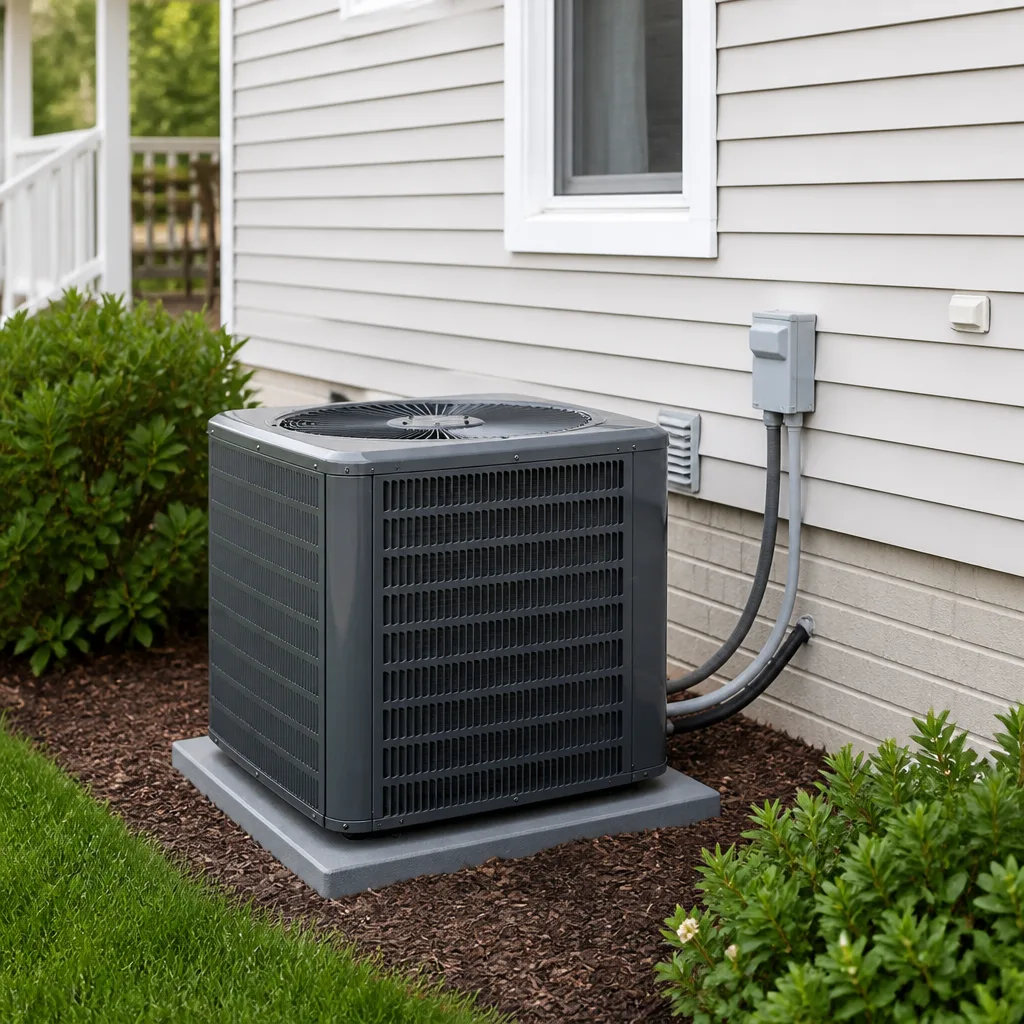 Goodman
Seasonal tune-up and full diagnostic on your Carrier, Trane, or Goodman system - readings shown to you before any repair is proposed
Diagnosis first, numbers second - you approve the repair price before a single part goes in.
Get your free estimateBryant Ductwork Repair: The San Antonio Owner’s Guide
Bryant ductwork repair in San Antonio typically runs $150 – $650 depending on what’s failed – a separated joint, a collapsed flex run, a torn plenum connection, or a full section replacement. We stock Bryant-compatible duct fittings, collars, mastic, and flex duct on our trucks, so most repairs are completed the same day we arrive. Most San Antonio homeowners discover the problem the same way: one room suddenly feels ten degrees warmer than the rest of the house, or the utility bill jumps $40 in a month with no obvious reason.
Ductwork doesn’t fail loudly. It sags, separates, and tears quietly – especially in attics where San Antonio summer heat bakes the adhesive and the plastic vapor barrier until they give out. A Bryant system pushing air through a leaking duct run is working harder than it should, and the rooms at the end of that run pay the price. Luis Serrano has walked enough Alamo Heights and Stone Oak attics to know the pattern: the damage is rarely at the register where you feel it. It’s usually thirty feet away, hidden under insulation.
Which Bryant Models This Applies To
The ductwork connected to your Bryant system is not model-specific in the way a control board or blower motor is. Bryant equipment – from the Legacy line to Evolution and Preferred series – connects to standard residential duct sizing: 4-inch through 16-inch flex runs, rectangular trunk lines, and sheet-metal plenums. What matters is the connection points. The plenum collar where the duct meets the Bryant air handler or furnace cabinet is the single most common failure point on every series, because that’s where temperature swings and vibration concentrate.
When we do a Bryant ductwork repair in San Antonio, the first thing we check is the model and age of the indoor unit, because older Bryant units often used metal duct collars with foil tape, while newer installs use mastic-sealed takeoffs. Foil tape fails far more often in Texas attics – the adhesive dries out in two to three summers. If we’re matching a specific Bryant plenum or transition piece, we cross-reference the unit’s model number against the original install specs. For the duct itself, OEM Bryant-branded flex duct exists, but aftermarket R-6 or R-8 flex from reputable manufacturers performs identically and costs 20 – 30% less. We’ll tell you which one makes sense for your run, and the price difference, before we start.
Styles & brands we work with
Signs Your Bryant Ductwork Repair Is Failing
- One or two rooms never reach the thermostat setting. The Bryant system is producing the right amount of conditioned air, but a disconnected or crushed duct run is bleeding it into the attic before it reaches the register. The rooms at the end of the longest trunk line fail first.
- Dust on surfaces returns two days after cleaning. A torn return duct pulls attic air – insulation fibers, dust, whatever is up there – straight into the Bryant system and distributes it through every supply register. If the dust is gray-brown and fine, that’s attic dust.
- A new, unexplained spike in the electric bill. When supply air escapes into the attic, the Bryant unit runs longer to satisfy the thermostat. In July and August here, a 20% duct leak can add $30 – $50 to a San Antonio electric bill in a single month.
- Whistling or fluttering noises near registers or in walls. Air escaping through a small tear or a loose collar makes a high-pitched sound that changes when the blower ramps up. Fluttering usually means the vapor barrier has torn loose and is moving with the airflow.
- The attic smells musty, or the air from registers smells stale. A return-side leak pulls hot, humid attic air into the Bryant system. That air carries whatever the attic holds – and in San Antonio’s humidity, it can also encourage mold growth inside the duct liner.
Replacement Cost & What’s Included
Here’s what ductwork repair pricing looks like in San Antonio, based on the work we most often quote:
- Reseal a separated duct collar or plenum takeoff: $150 – $250 – includes mastic, fasteners, and re-insulating the connection
- Repair a torn flex duct (short run, accessible attic): $200 – $350 – includes a replacement section, new clamps, and sealing
- Replace a collapsed or crushed flex run (10 – 15 feet): $350 – $550 – includes new R-6 flex, hangers to prevent future sagging, and mastic sealing
- Repair or rebuild a damaged plenum or transition fitting: $400 – $650 – includes sheet-metal fabrication, sealing, and insulation wrap
Every quote is a written price before work starts – parts and labor separated so you can see exactly what you’re paying for. We use mastic, not tape, on connection points because mastic survives Texas attic heat. And the repair is covered by our 365-Day Done Right Promise: if the same joint fails again within a year, we fix it at no charge, no fine print.
See the difference
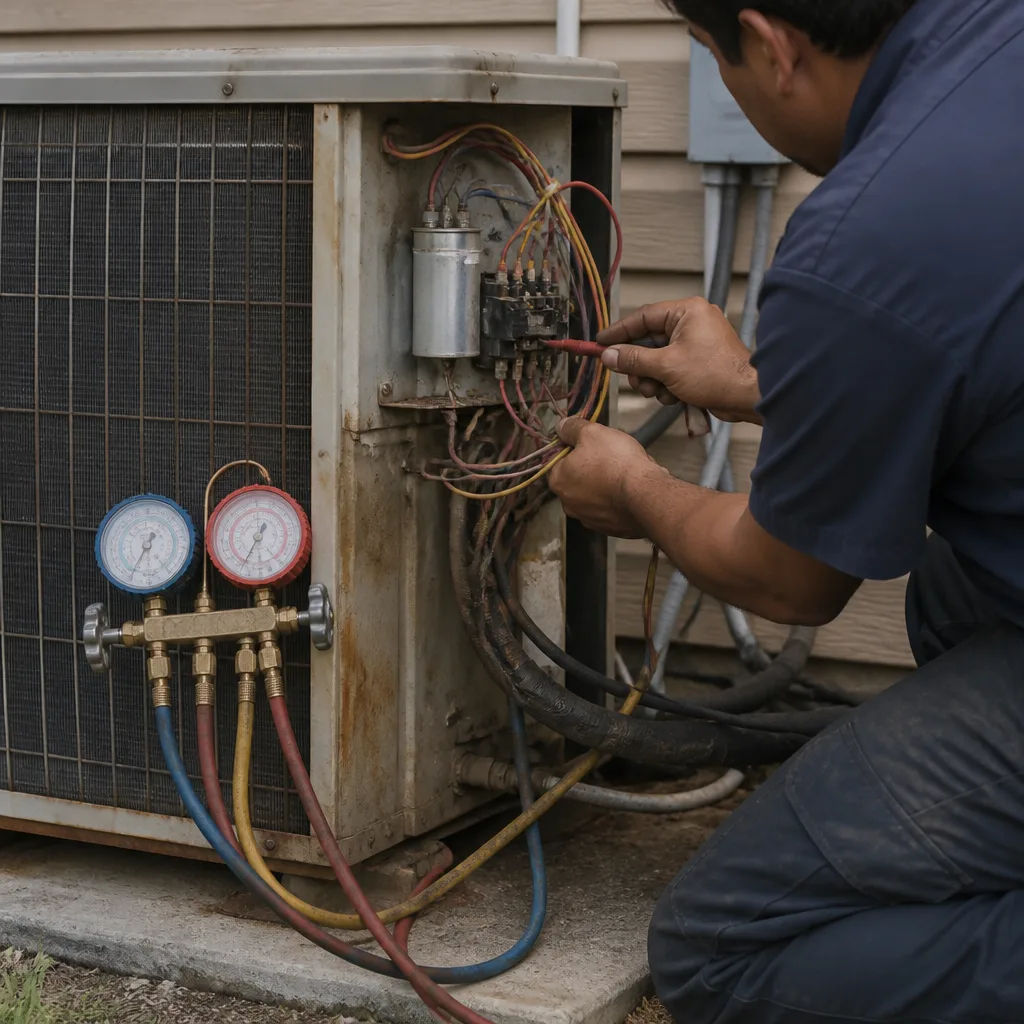 Before
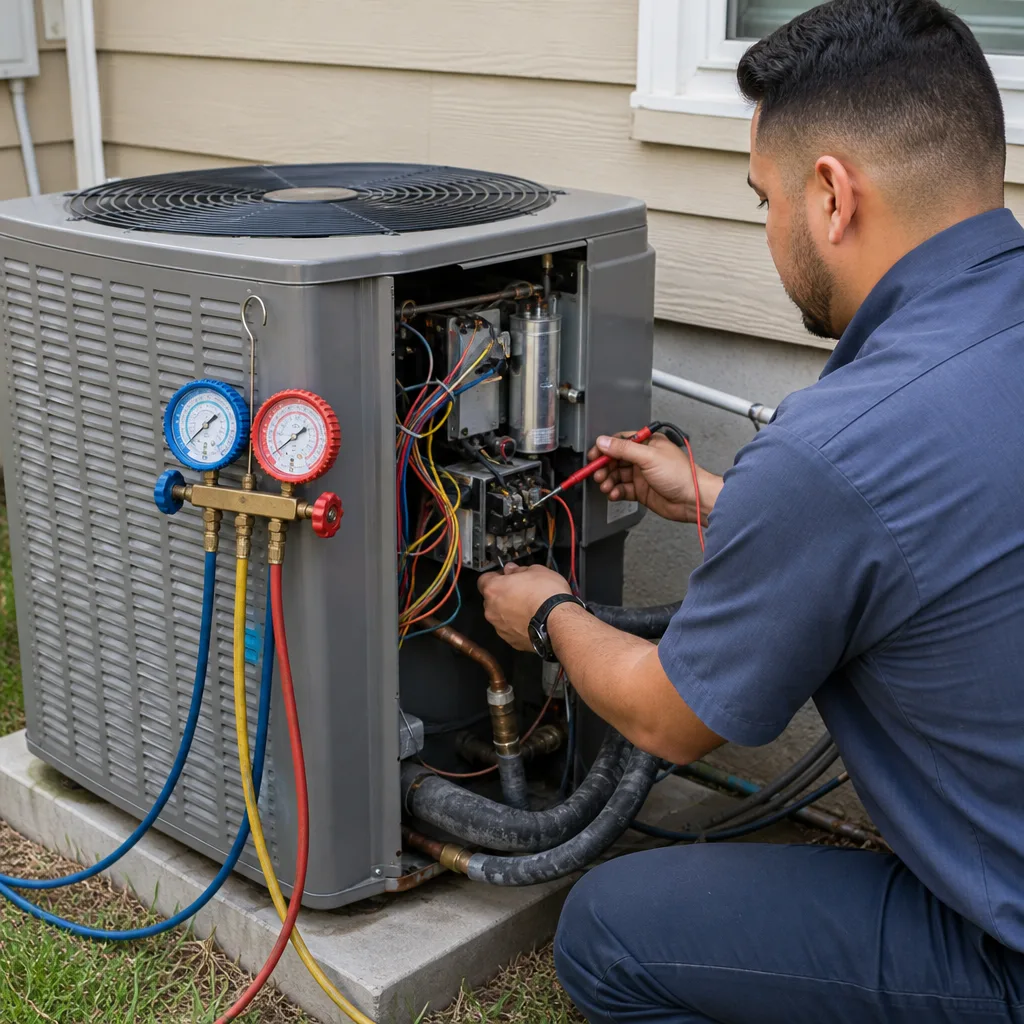 After
After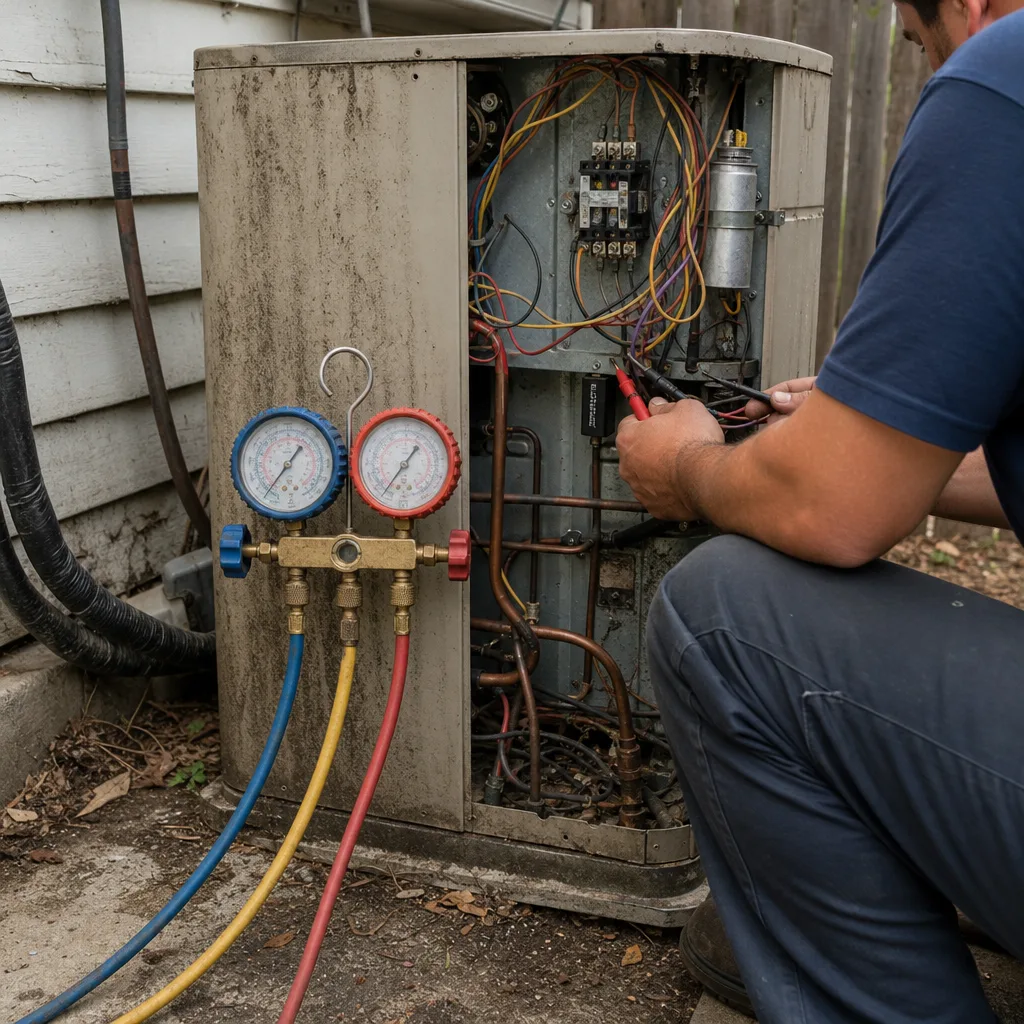 Before
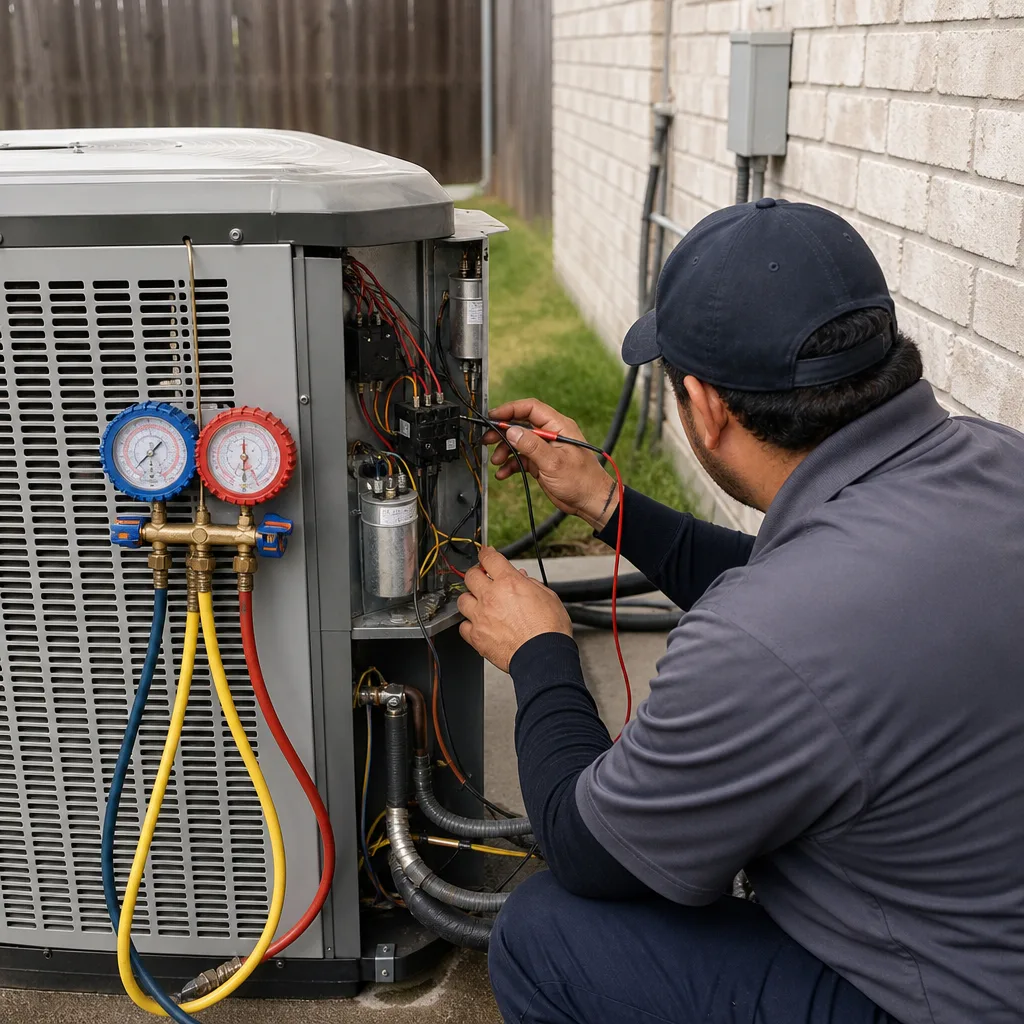 After
After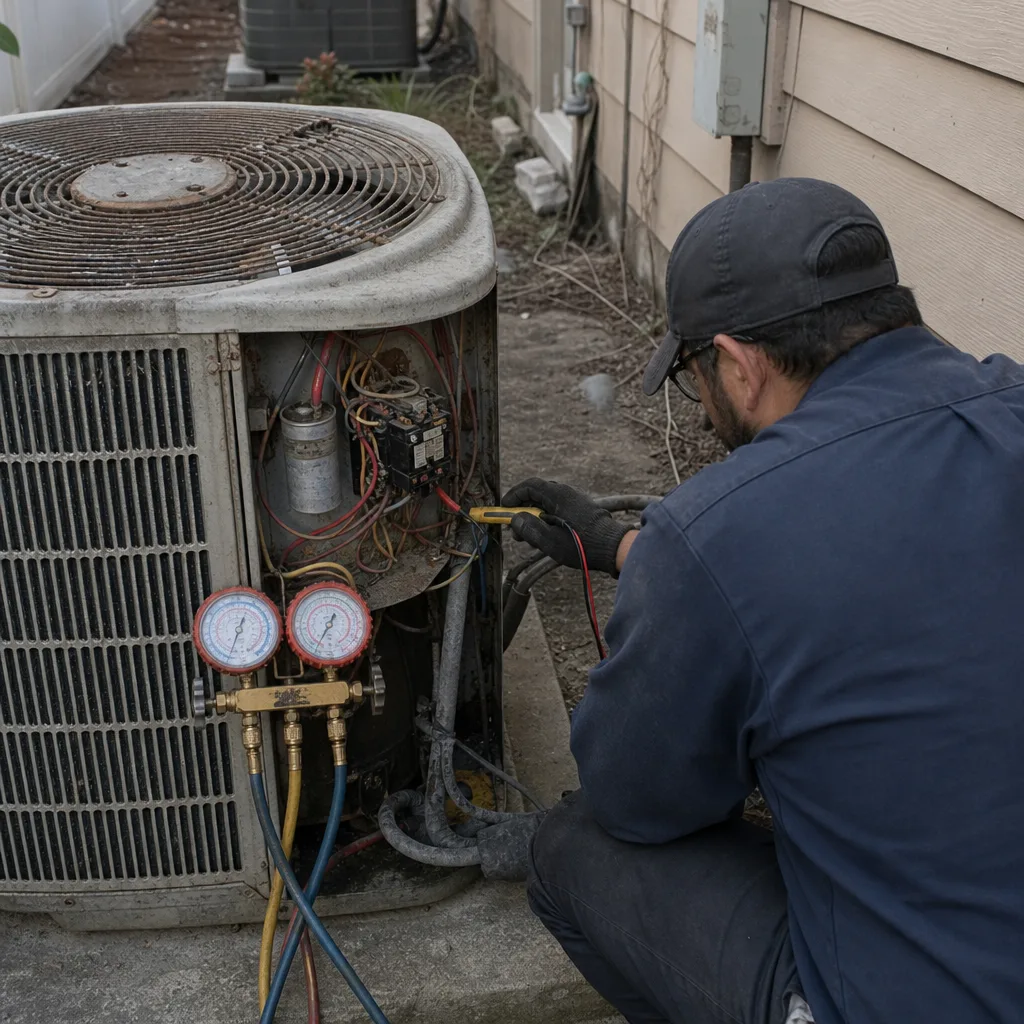 Before
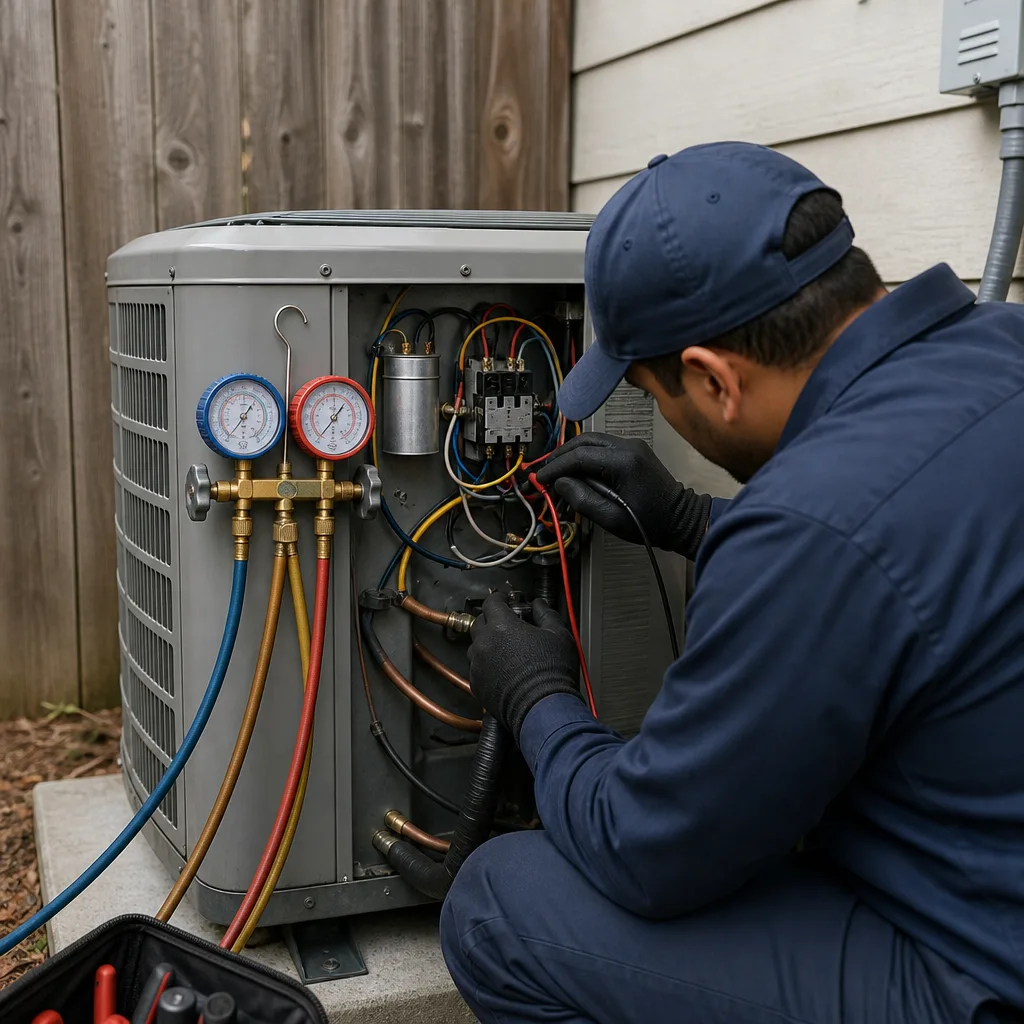 After
AfterDIY or Call Us?
You can safely do two things yourself before calling: check that every register is fully open (a closed register forces air pressure through the weakest duct joint), and visually inspect any exposed ductwork in a garage, closet, or basement – looking for obvious gaps, sagging flex, or foil tape peeling away. That’s it. Ductwork in a San Antonio attic is a different story: 140-degree working conditions, blown insulation hiding the seams, and a wrong step that puts a foot through the ceiling drywall. It’s not a repair to attempt in July with a headlamp and a roll of tape from the hardware store.
If you’ve found a problem, call (254) 271-2545 and describe what you’re seeing. We’ll give you an honest read on whether it needs a technician. If it does, the written price comes before any work begins.
FAQs
Flex duct in San Antonio attics typically lasts 10 – 15 years before the vapor barrier becomes brittle or the inner liner starts degrading. Metal trunk lines last 25 – 40 years. Attic heat is the primary aging factor – the same duct that lasts 20 years in a mild coastal climate fails a decade earlier in a Texas attic.
Small tears, separated collars, and loose joints can be repaired with mastic and proper fasteners. A flex run that has collapsed, water-damaged, or torn along its length usually needs section replacement. We’ll always show you the damage and explain which option makes sense before writing the quote.
Most repairs take 45 minutes to 2 hours once the technician is in the attic. A full flex-run replacement can take 2 – 3 hours. We’ll give you a time window when you call, and the crew cleans up before they leave – with a photo of the finished work area.
Yes. Our trucks carry standard flex duct in common sizes, collars, mastic, clamps, hangers, and sheet-metal materials for plenum repairs. For unusual Bryant transition pieces, we can source and install them within one to two business days. We also stock repair parts for Carrier, Trane, and Lennox systems, since many San Antonio homes run mixed equipment.
Call for a Free Ductwork Repair Estimate
If your Bryant system is cooling unevenly, pushing dust, or running longer than it should, call Meadowsweet Heating and Air San Antonio at (254) 271-2545 for a free estimate. A live person answers – nights, weekends, and holidays included. Tell us what the house is doing, and we’ll tell you what it needs. Written price first, shoe covers on in the house, and a photo of the clean-up before we leave. That’s how every job ends, every time.
Written by Luis Serrano, Owner, Meadowsweet Heating and Air San Antonio at Meadowsweet Heating and Air San Antonio, serving San Antonio and nearby areas.