
 Furnace & heating
 AC repair
 Heat pumps
 Ductless mini splits
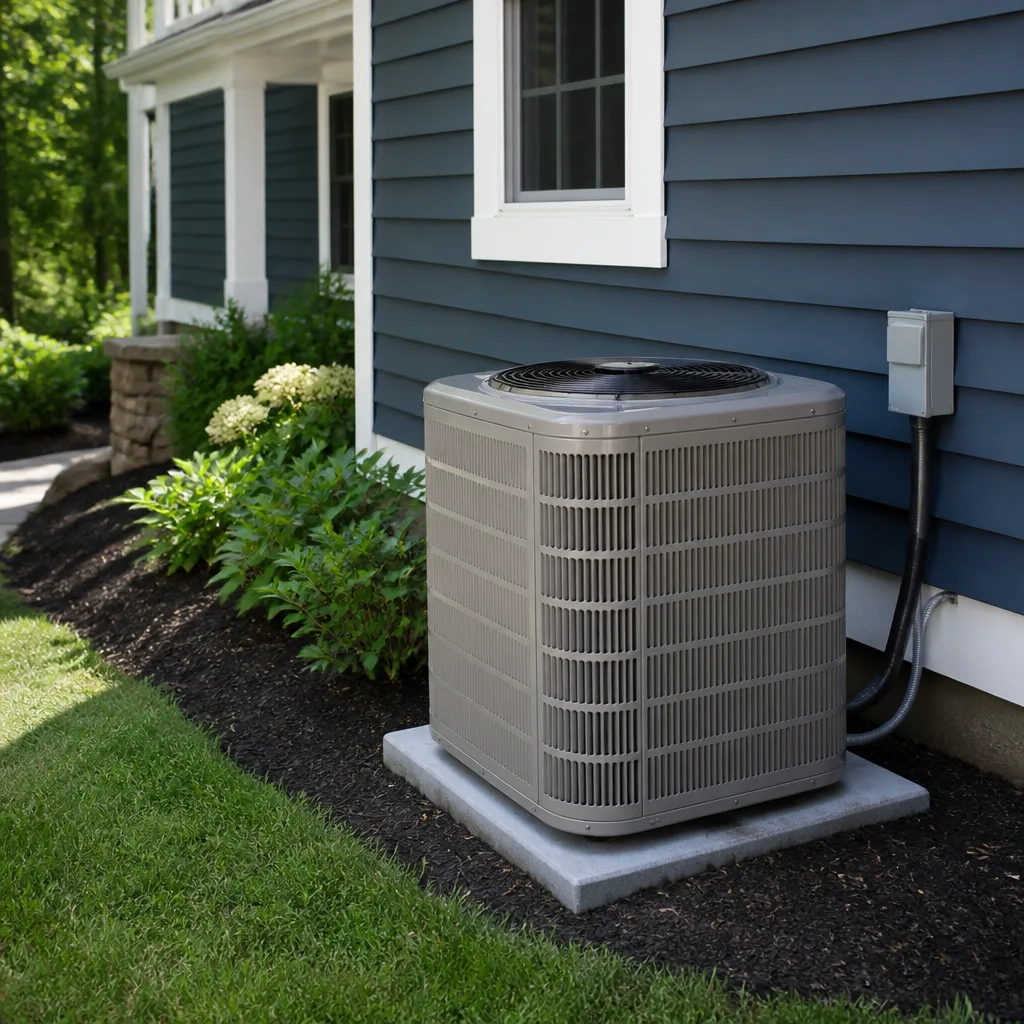 Carrier
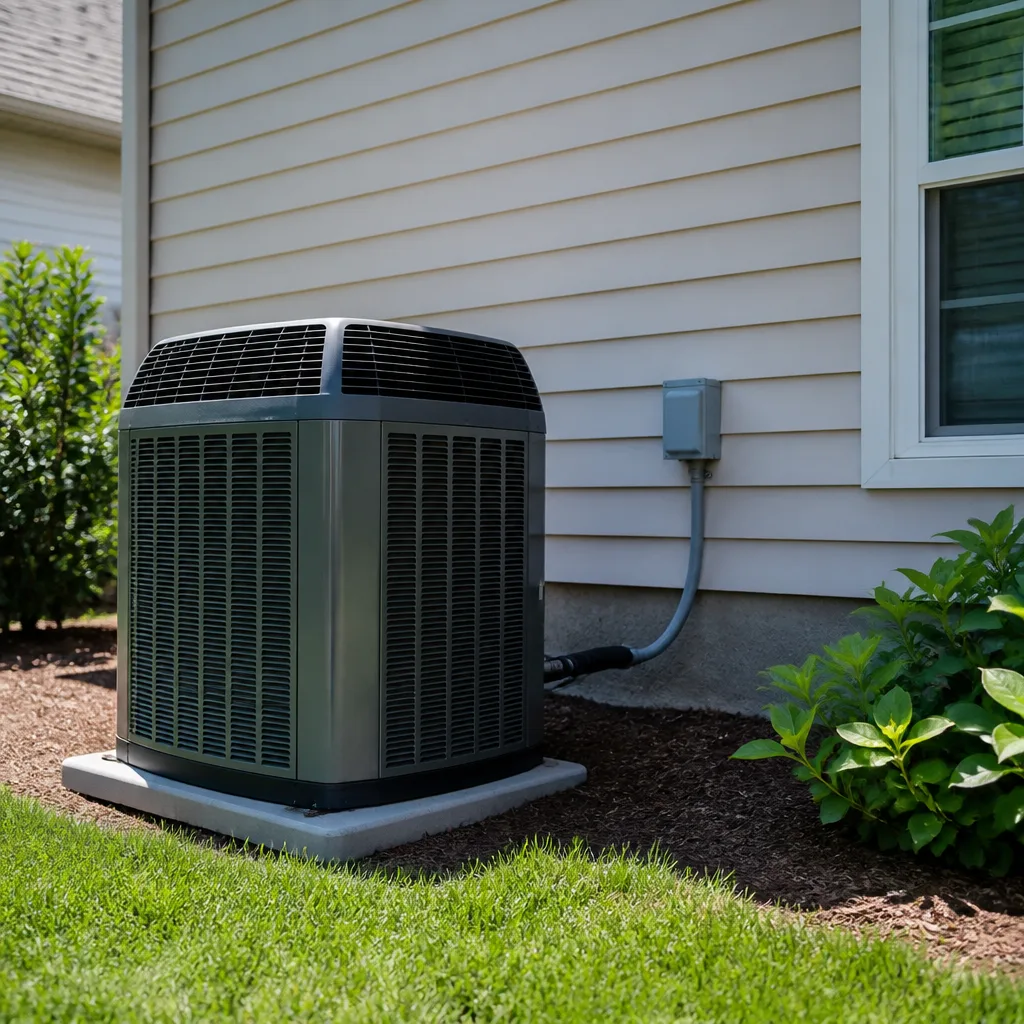 Trane
Trane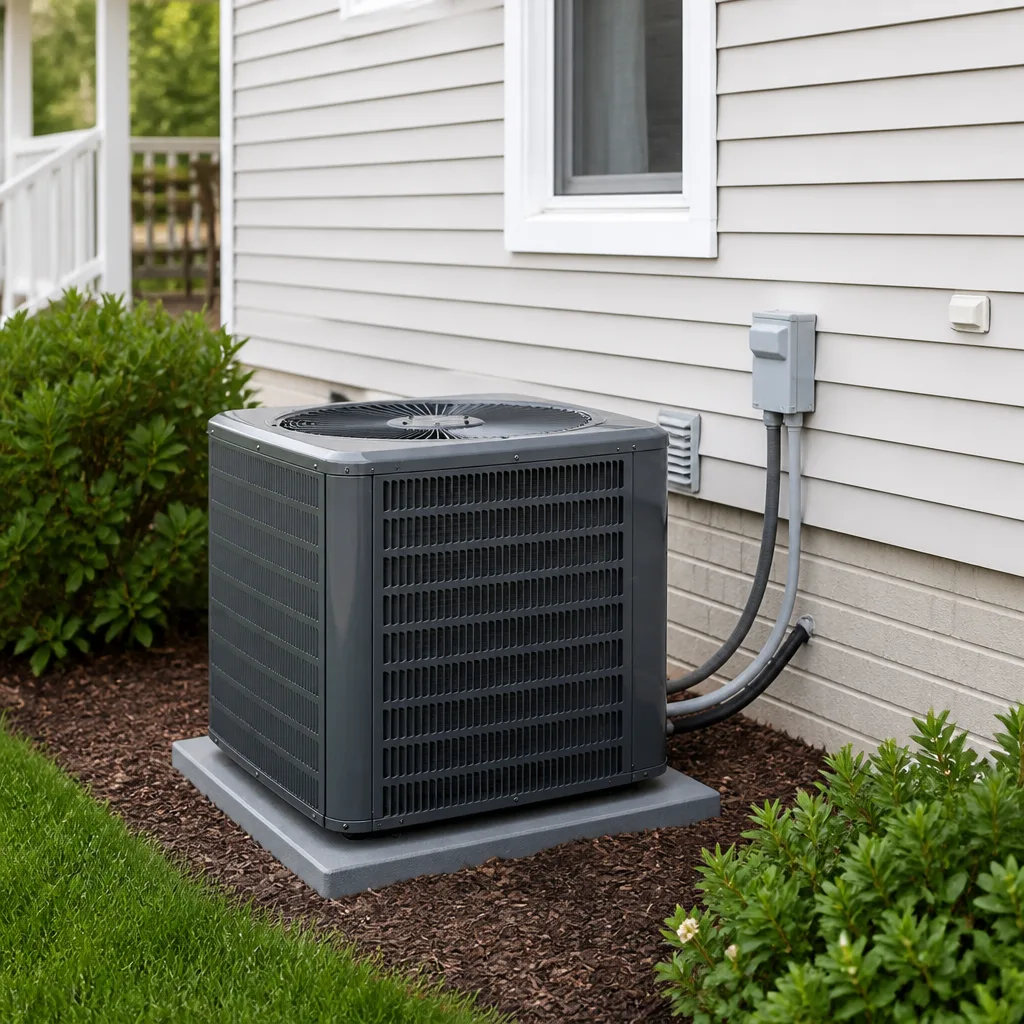 Goodman
Seasonal tune-up and full diagnostic on your Carrier, Trane, or Goodman system - readings shown to you before any repair is proposed
Diagnosis first, numbers second - you approve the repair price before a single part goes in.
Get your free estimateCarrier Capacitor Replacement: The San Antonio Owner’s Guide
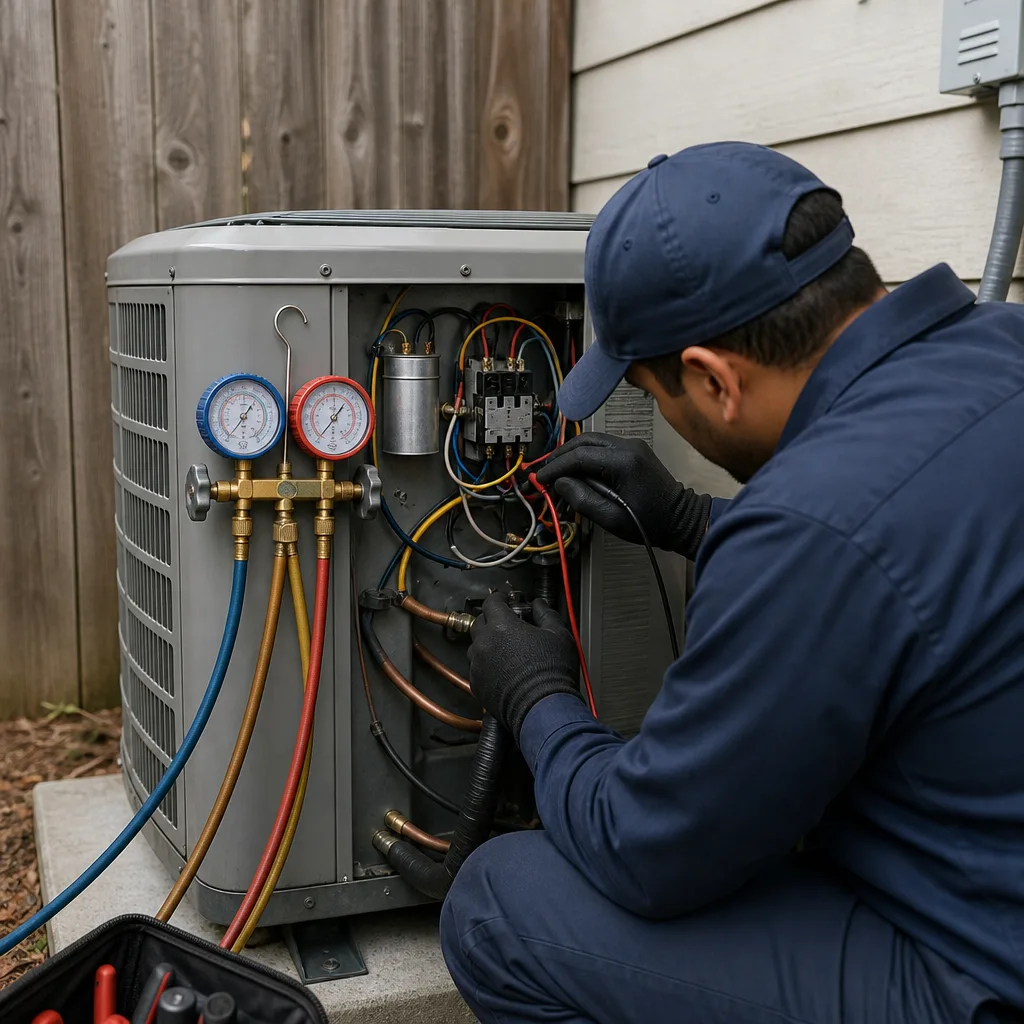
Carrier capacitor replacement in San Antonio typically costs $89 – $190 installed, and we keep common Carrier-compatible dual-run and start capacitors stocked on our trucks for same-day service. A failing capacitor is the most common reason a Carrier condenser hums but won’t start, or the compressor kicks off mid-cycle on a hot afternoon. The usual tell: your outdoor unit is running, the fan is spinning, but the air coming from the vents isn’t cold, or the whole system is dead at the thermostat with no explanation.
The good news is this is a fast, predictable repair. The part itself is inexpensive. The labor is straightforward for a trained tech. What matters most is that the replacement is matched to your Carrier unit’s exact microfarad (µF) rating and voltage tolerance, because a wrong-spec capacitor can damage the compressor motor in a matter of weeks. Luis Serrano and our crew see this failure pattern constantly across San Antonio, especially in neighborhoods like Alamo Heights, Terrell Hills, and Stone Oak, where Carrier equipment from the mid-2010s is reaching the end of its original capacitor life. When the heat index climbs past 105°F, a marginal capacitor gives up fast. That’s when we get the calls.
Key Takeaways:
- Installed Carrier capacitor replacement in San Antonio: $89 – $190 depending on capacitor type and accessibility
- We stock Carrier-compatible dual-run, start, and turbo capacitors on the truck for same-day fixes
- A wrong-spec capacitor can burn out your compressor; we match µF and voltage to the data plate, never by guesswork
- Written price before we open the unit, every time, no exceptions
Which Carrier Models This Applies To
This guide covers the capacitors used in Carrier split-system air conditioners and heat pumps, including the Infinity series, Comfort series, Performance series, and the builder-grade Carrier units installed across San Antonio’s northside communities over the past decade and a half. The exact capacitor your system needs depends on which motor it serves. Most Carrier condensers and heat pumps use a dual-run capacitor that supports both the compressor and the outdoor fan motor. These are typically round or oval metal cans rated anywhere from 35/5 µF to 80/10 µF, with a voltage rating of 370 or 440 VAC.
The compatibility gotcha most homeowners run into: a 440 VAC capacitor can replace a 370 VAC unit, but never the other way around. Swapping a lower-voltage capacitor into a system that calls for 440 VAC is a fast way to blow the capacitor and stress the compressor. Another Carrier-specific detail is that some Infinity and Performance models use an additional start capacitor and potential relay for the compressor, especially on larger tonnage units. If your condenser label reads “capacitor, start assist” or you have a hard-start kit, we check that separately during diagnosis. For San Antonio customers, the practical takeaway is this: bring us the model number from the data plate and we’ll match the correct Carrier-approved or equivalent capacitor. We stock both genuine Carrier and quality aftermarket brands like Titan HD and AmRad, and we’ll tell you the price difference before we install either one. As an independent service provider, we aren’t a Carrier-owned operation, which means we get to recommend the part that’s actually best for your unit and your budget, not whichever one satisfies a corporate parts program.
Styles & brands we work with
Signs Your Carrier Capacitor Replacement Is Failing
- Outdoor unit hums but the fan doesn’t spin. The capacitor has lost enough microfarad capacity that it can no longer supply the starting torque the fan motor needs. You might catch a faint electrical buzz from the unit, which is the motor trying and failing to turn.
- Air from the vents is warm or not as cold as it used to be. When the compressor capacitor fails, the compressor won’t start even if the fan is running. You’ll hear the fan, feel the airflow, and get nothing but warm air from the registers. This is the single most common no-cooling call we run in San Antonio between May and September.
- The system short-cycles or the breaker trips intermittently. A failing capacitor forces the compressor to draw higher amperage on startup. That can eventually trip the breaker, or cause the compressor to overheat and shut down mid-cycle. In some Carrier units, the thermostat will show an error code for a compressor or fan fault.
- You need a “push start.” Some homeowners discover they can spin the fan blades with a stick and the unit fires up. That’s not a fix, and it’s not safe. A spinning fan is a sign the capacitor is too weak to do its job on its own, and forcing a start this way can damage the motor windings over time.
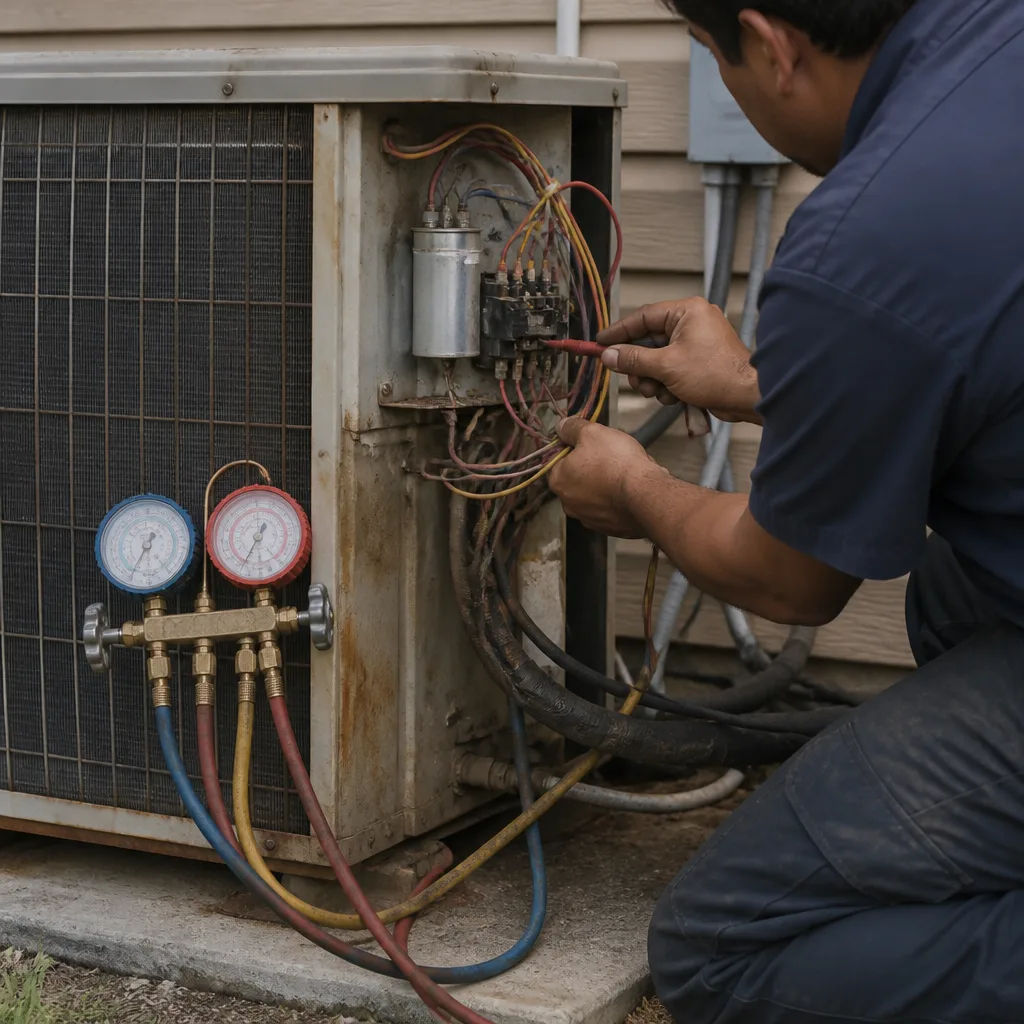
- The capacitor looks swollen, domed, or is leaking oily residue. Carrier capacitors, like all electrolytic capacitors, are sealed metal cans. When they overheat from age, hard starts, or sustained heat exposure, the internal pressure deforms the can. A bulge at the top or an oil stain under the cap means it’s done. We check this on every tune-up, because catching it early in a San Antonio attic, where ambient temps are brutal, beats a failure at 2 a.m. in July.
See the difference
 Before
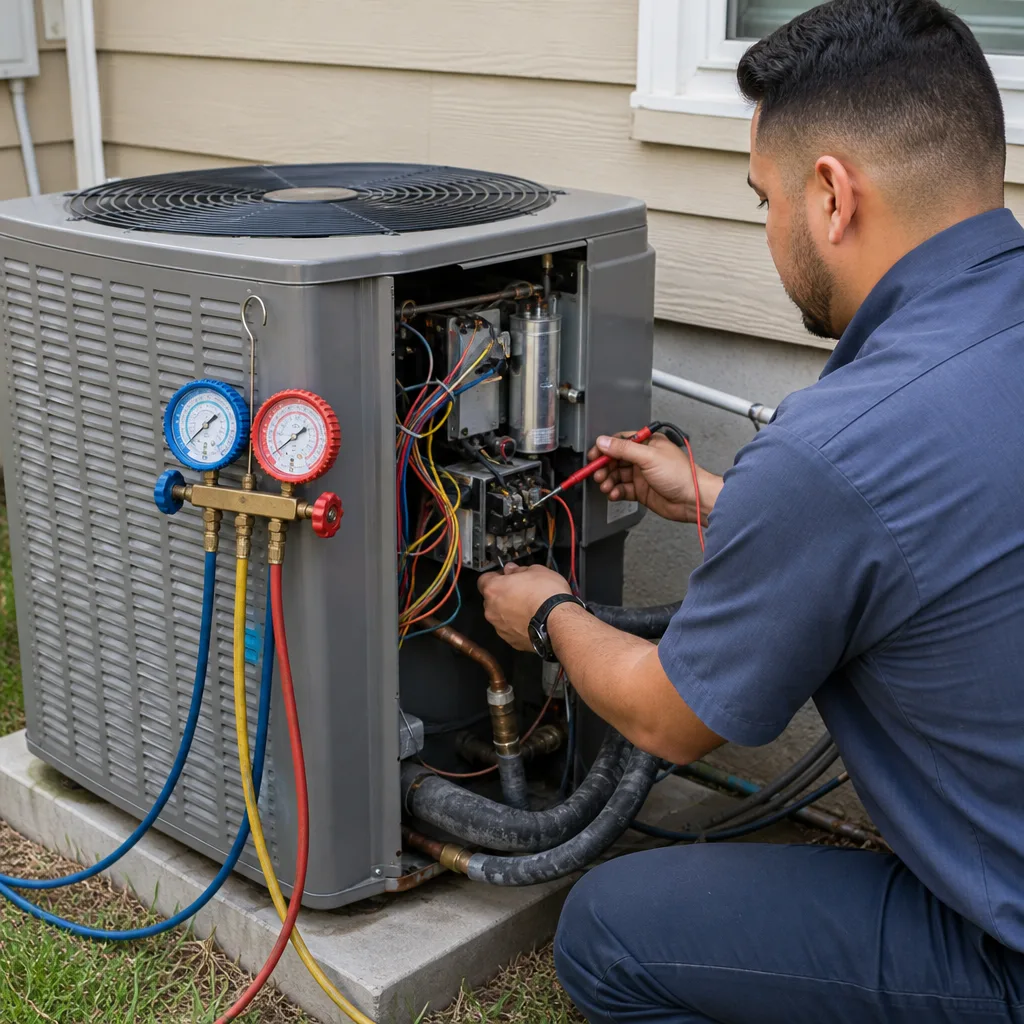 After
After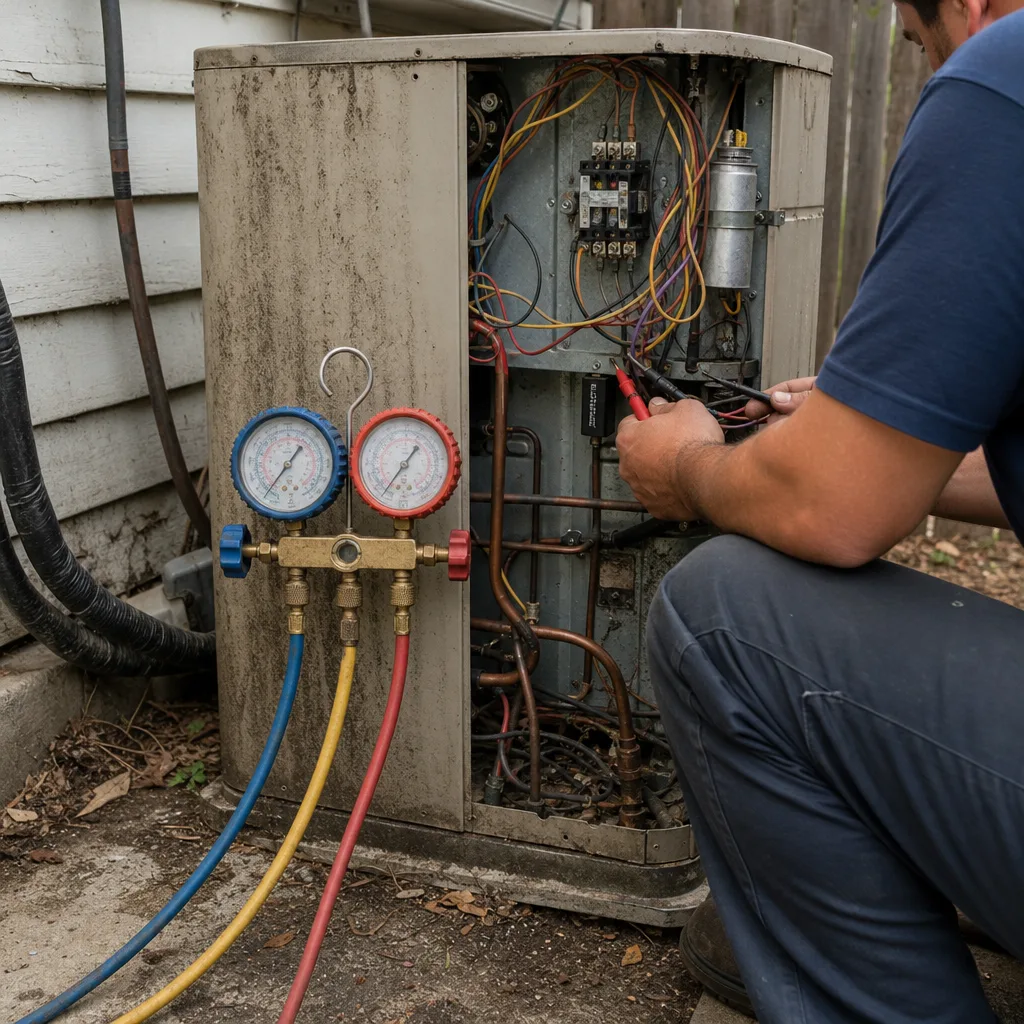 Before
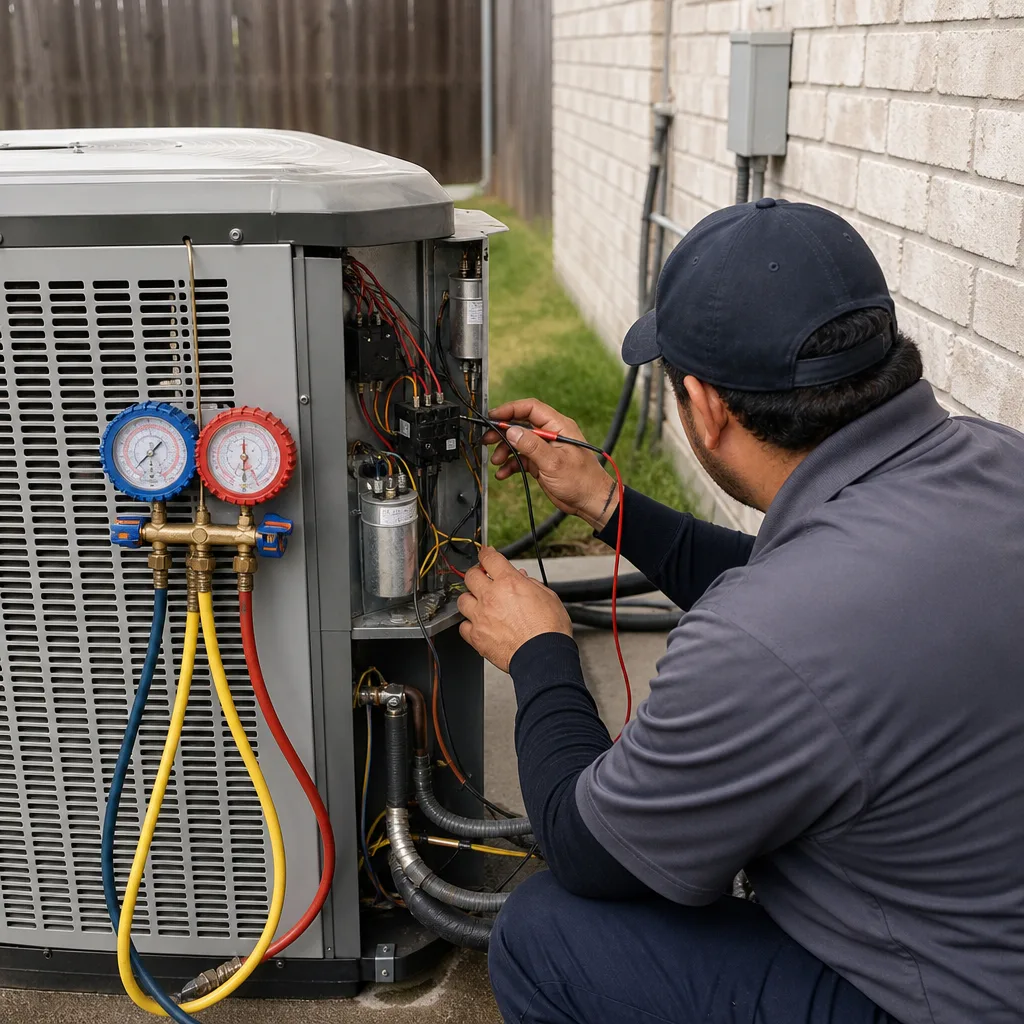 After
After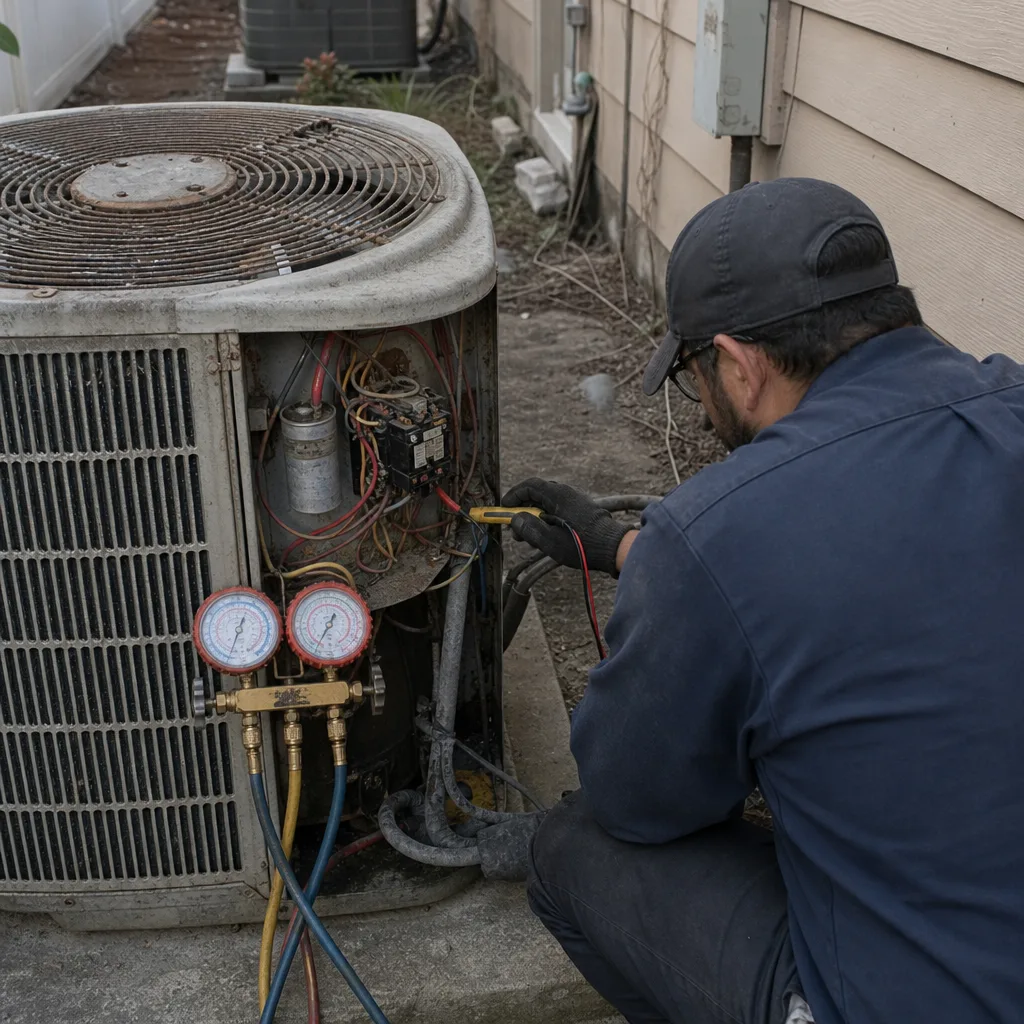 Before
 After
AfterReplacement Cost & What’s Included
In San Antonio, expect to pay $89 – $190 for a Carrier capacitor replacement installed. That range covers the capacitor itself (typically $15 – $60 for a quality round or oval dual-run cap), a service call diagnostic ($30 – $60 depending on location), and the labor to swap and test the part. Where your job falls in that range depends on a few things: whether it’s a single dual-run capacitor or a dual-run plus a start capacitor, whether we’re testing and replacing a hard-start kit at the same time, and how accessible your condenser is. A Carrier Infinity with a scroll compressor and start assist is on the higher end. A standard 3-ton Comfort series with one dual-run cap is on the lower end.
You get a written price before we unbolt anything. That’s not a sales tactic; it’s our standard operating procedure. The price covers diagnosis, the replacement part, installation, connection tightening, and a full startup test that checks amperage draw, microfarad output on the new cap, and refrigerant temperature split. We back the work with our 365-Day Done Right Promise. If the capacitor fails during that window due to a defect or improper installation, we make it right. No runarounds, no fine print.
DIY or Call Us?
We’ll be straight with you: a capacitor stores enough electrical charge to deliver a serious, even fatal, shock, even with the unit disconnected from the wall. This is not a “watch a YouTube video and give it a shot” repair. There’s a reason every capacitor has a warning label on the side. On top of the shock risk, installing a capacitor with the wrong microfarad rating or voltage, or wiring it to the wrong terminals, can damage your compressor, which is a $2,000+ repair, not a $150 one. That said, there are safe things you can do before you call. You can check the breaker. You can look at the capacitor through the access panel, if you know where it is and the power is fully off at the disconnect and breaker, and see if it looks swollen or leaked. That information helps us when you call. But the actual removal, discharge, and replacement? That’s a job for a trained, background-checked professional. Our techs carry insulated tools, discharge the cap safely with a resistor, and test the new part before buttoning the unit back up.
Call (254) 271-2545 and tell us what the house is doing. We’ll tell you what it needs. Same-day appointments are available in San Antonio most days, including weekends, because we know a dead AC on a Saturday doesn’t wait politely until Monday.
FAQs
How long does a Carrier capacitor last in San Antonio heat?
A Carrier capacitor typically lasts 5 to 10 years, but San Antonio’s heat shortens that window. Prolonged exposure to 100°F-plus ambient temperatures, frequent cycling, and voltage spikes from the grid during brownouts all degrade the internal dielectric oil faster. We see capacitors failing at the 5-to-7-year mark on Carrier units in San Antonio with regular frequency. If your system is over 8 years old and still on its original capacitor, a pre-emptive replacement during a tune-up is often money well spent.
Can a failing capacitor be repaired instead of replaced?
No. A capacitor is a sealed, self-contained electrical component. Once the internal windings degrade, the dielectric fluid breaks down, or the can deforms, there’s no repair that restores it. Replacement is the only correct fix. The good news: it’s a fast and inexpensive repair compared to nearly everything else on an AC system. Call us at (254) 271-2545 for a written quote; the phone is answered by a live person around the clock.
How long does a Carrier capacitor replacement take?
Most single-capacitor replacements take 30 to 45 minutes from arrival to completed startup test. If we’re also replacing a start capacitor or a hard-start kit, or if your condenser is difficult to access, the job can stretch to 90 minutes. We factor the time into the written price before we start, so you’ll know the number before the first tool comes off the truck.
Do you stock Carrier capacitors on the truck?
Yes. Our service vehicles carry common Carrier-compatible dual-run capacitors in 35/5, 40/5, 45/5, 50/5, 55/5, 60/5, and 70/5 µF ratings, plus start capacitors for larger Infinity and Performance units. We also stock compatible parts for Trane and Lennox systems, which we service regularly. If your Carrier unit calls for an unusual spec, we can typically have it from our San Antonio supplier within a few hours. For a free estimate or same-day service, call (254) 271-2545.
Written by Luis Serrano, Owner, Meadowsweet Heating and Air San Antonio at Meadowsweet Heating and Air San Antonio, serving San Antonio and nearby areas.